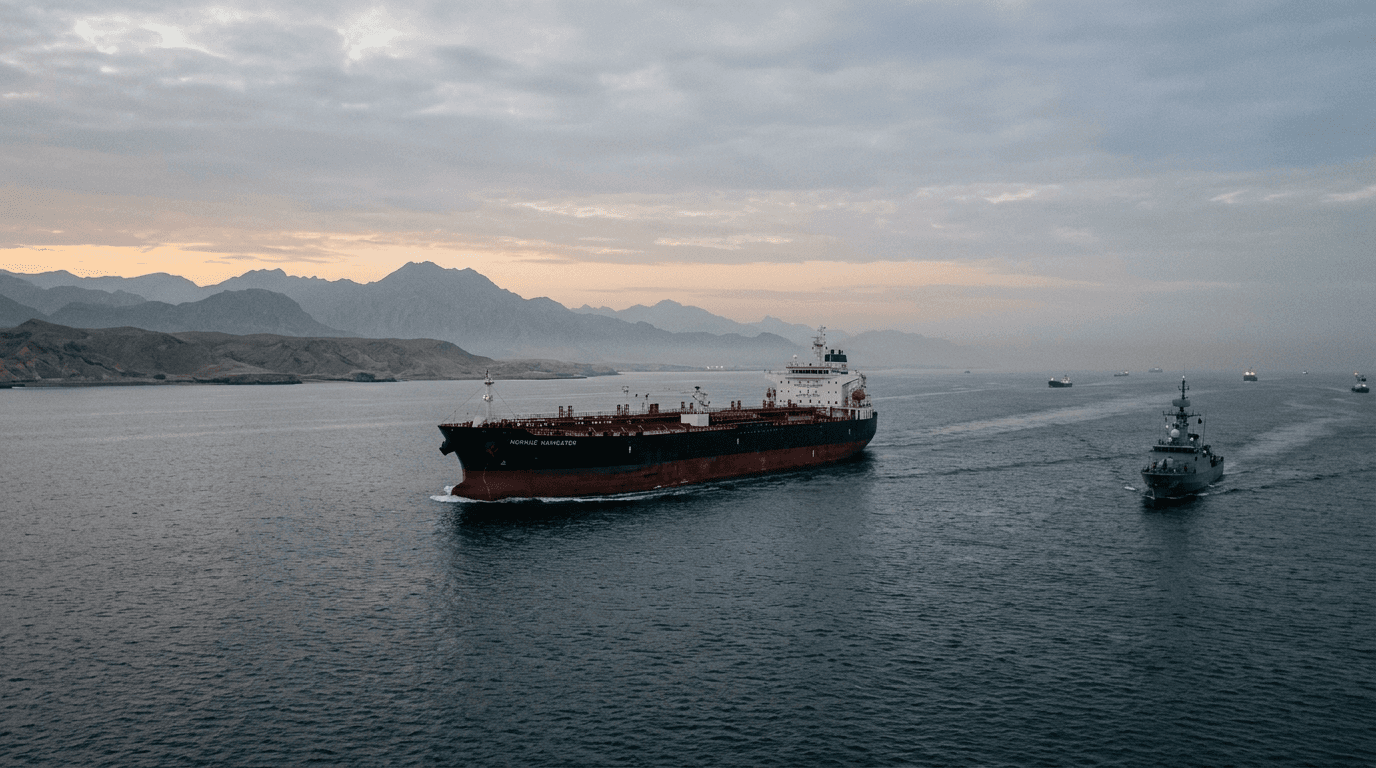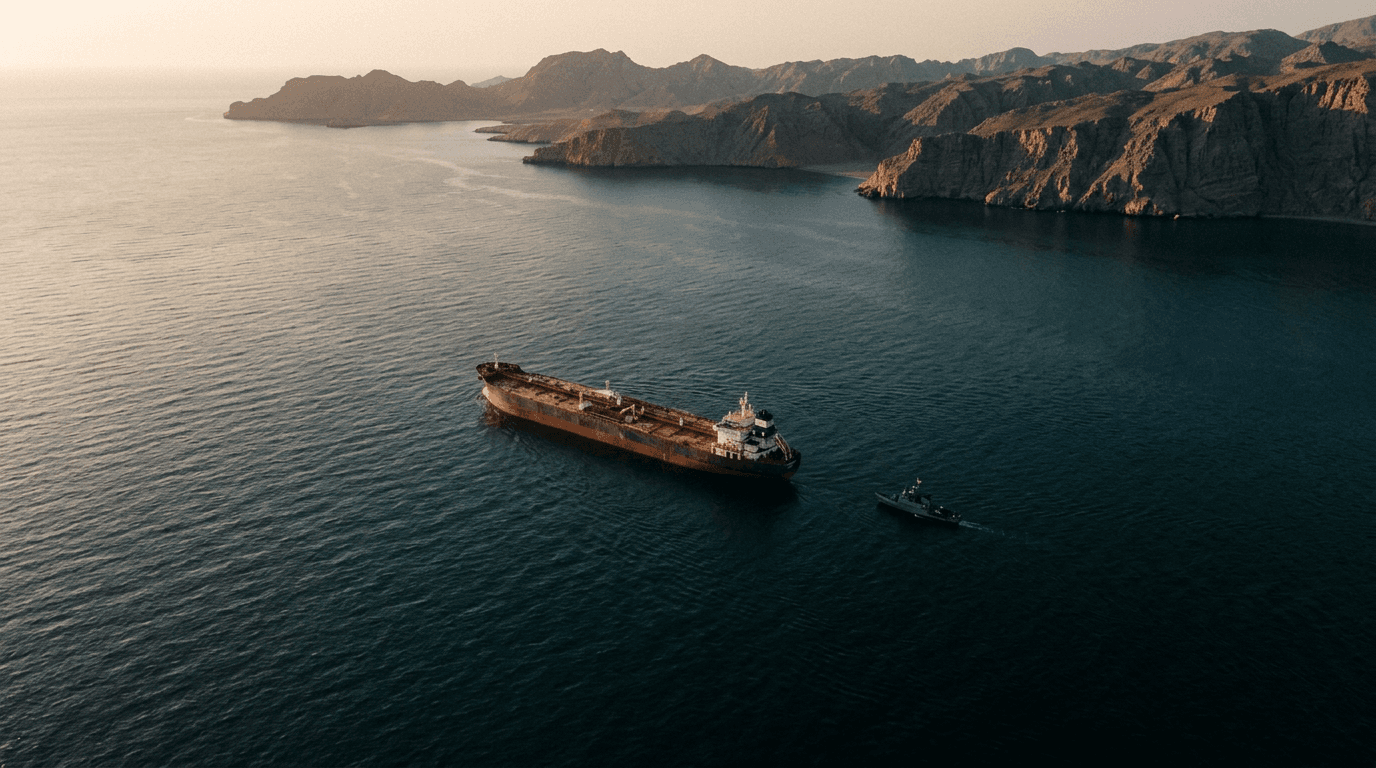
The Strait of Hormuz remains a dangerous, disrupted route for commercial shipping, and when traffic will return to normal is still an open question. The latest seven-day average was 2.3 transits a day through mid-November, compared with a pre-crisis average of 84.8 transits a day. Kalshi traders put the chance of a seven-day average above at least 60 commercial crossings a day before January at 4% as of 9:13 a.m. ET on Nov. 18. That price reflects what traders currently believe, not a timetable for ships to return.
The threshold is a measure of traffic, not an official declaration that the waterway has reopened. The FAQ describes its own open-status test as requiring a lower threat level and no closure in force, in addition to traffic reaching at least 60 commercial crossings a day. So even a sustained increase in transits would not by itself establish that shipping had returned to broadly normal conditions. The market asks whether a moving average will clear its threshold by a deadline; the reported traffic average describes recent observed movement.
PortWatch recorded 2 transits in mid-November, according to the daily brief. June was the busiest month since the conflict began, but traffic still averaged only 12.9 AIS-visible transits a day, far below the pre-crisis level. The same brief reported attacks on commercial vessels in mid-November, including an ADNOC L&S vessel and the LPG tanker Tara Gas, and said one crew member was missing. These events underscore that even a recovery in traffic would depend on ships being able to cross safely, not just on a formal change in status.
Political conditions remain unresolved. Iran’s position is conditional on US actions, while the United States has not accepted Iran’s conditions. Ships have crossed under US naval coordination, offering a reason not to treat a political settlement as the only possible route to increased traffic. But reported attacks, threats to shipping and disagreement over conditions make a quick, durable return uncertain. The central question is whether commercial operators can resume regular passage safely and consistently, not simply whether a brief rise in crossings is possible.
Kalshi’s longer horizons show a more divided view of when traffic could reach its benchmark: traders put the chance of an average above at least 60 commercial crossings a day before August at 31%, before November at 43%, and before January at 67%. The nearest threshold has fallen down 7 points over the week, while the longer January horizon has fallen down 3 points over the week. Those prices do not resolve whether a recovery would last, whether it would come with reduced threats, or whether observed counts capture every crossing. Traffic remains a small fraction of its former level, and the route’s return to normal depends on both passage and security.