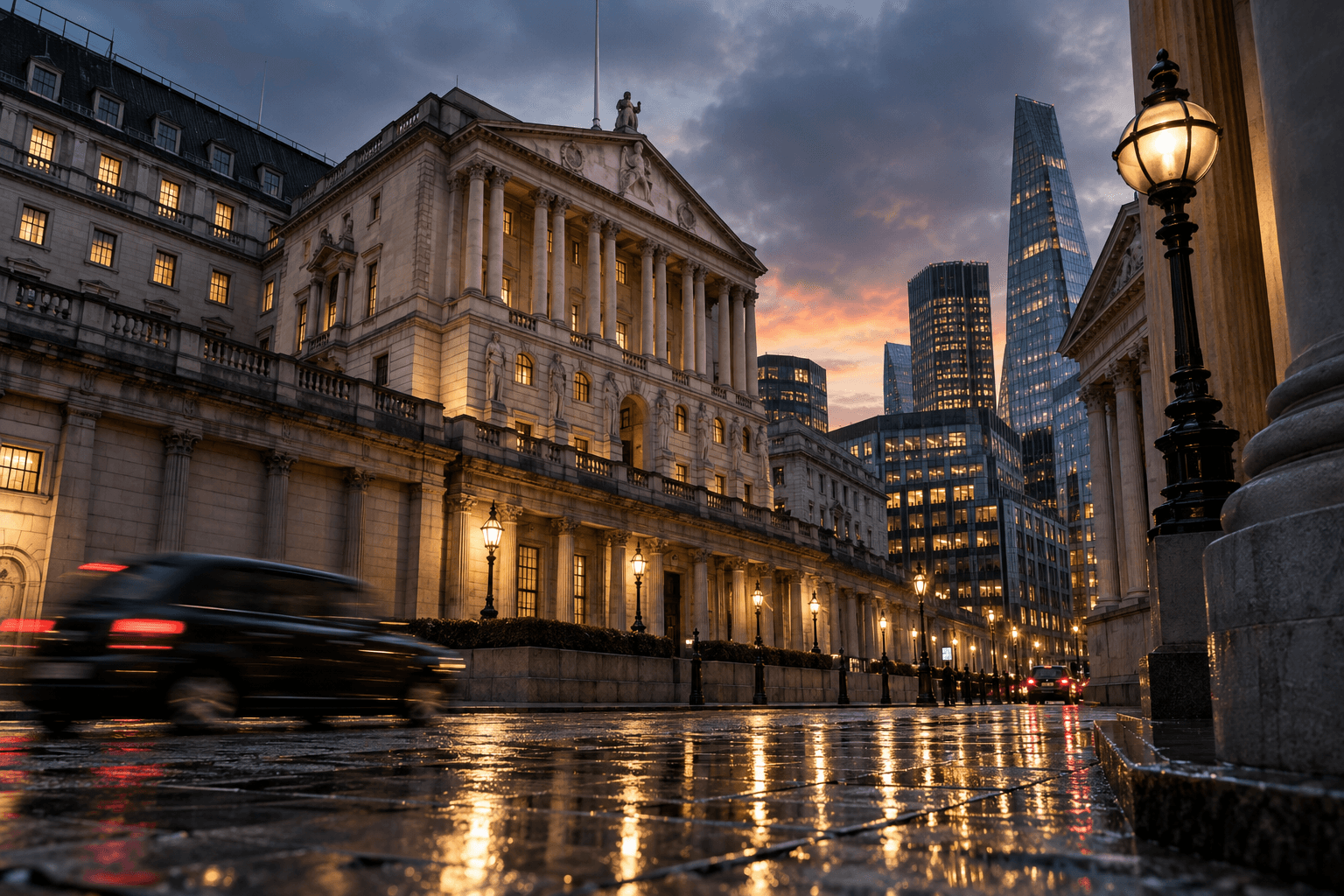
Britain's latest energy shock is pulling interest-rate risk back toward the center of the economic debate. Short-dated government bond yields climbed on Wednesday after oil moved above one hundred dollars a barrel, reviving concern that imported energy costs could keep inflation elevated. The move came one day after Bank of England Governor Andrew Bailey told lawmakers that investors should not assume officials have a hidden plan to raise borrowing costs. His message was deliberately conditional: higher energy prices create a real danger, but the committee still intends to judge the data and the persistence of inflation rather than validate every change in financial pricing.
The Bank Rate is currently three-point-seven-five percent, where policymakers left it at their July meeting. The central bank's public guidance says inflation is above its two-percent target and is expected to rise later this year as volatile energy costs work through household bills and business expenses. Reuters reported that two-year and five-year gilt yields reached one-week highs on Wednesday, while a new thirty-year government bond carried Britain's highest borrowing cost since at least the late nineteen-nineties. Those moves add pressure on households, companies and the government even before the Monetary Policy Committee makes another decision. They also complicate the task of separating a temporary imported price shock from domestic inflation that could justify tighter policy.
Prediction markets have moved faster than most economist forecasts. A Polymarket contract assigning a quarter-point increase at the Bank's November meeting rose by roughly twenty-three points on the breaking-news page and later stood near fifty-one percent. The broader event had generated about forty-eight thousand dollars in activity, including nearly six thousand over the latest day. Reuters separately reported that conventional financial markets were pricing about a seventy-percent chance of a November increase, while economists in its poll generally did not expect a rise this year. That divergence is useful context, but neither market represents a central-bank commitment. Bailey specifically described some of the curve as an inflation risk premium rather than a clean policy forecast.
The immediate checkpoint arrives before November. The committee is due to announce its next decision in September, and fresh inflation, wage and activity data will determine whether recent resilience is becoming a problem. A rate increase would raise mortgage and business-financing costs just as higher energy prices squeeze disposable income; holding steady would accept the risk that the shock becomes embedded in expectations. Bailey's pushback matters because it preserves room for either response. Investors now have to distinguish between protection against an adverse scenario and a confident forecast of what officials will do. The Bank's next statement, vote split and language on energy pass-through will show whether the committee sees the oil surge as a temporary external hit or the beginning of a broader inflation cycle that requires action.