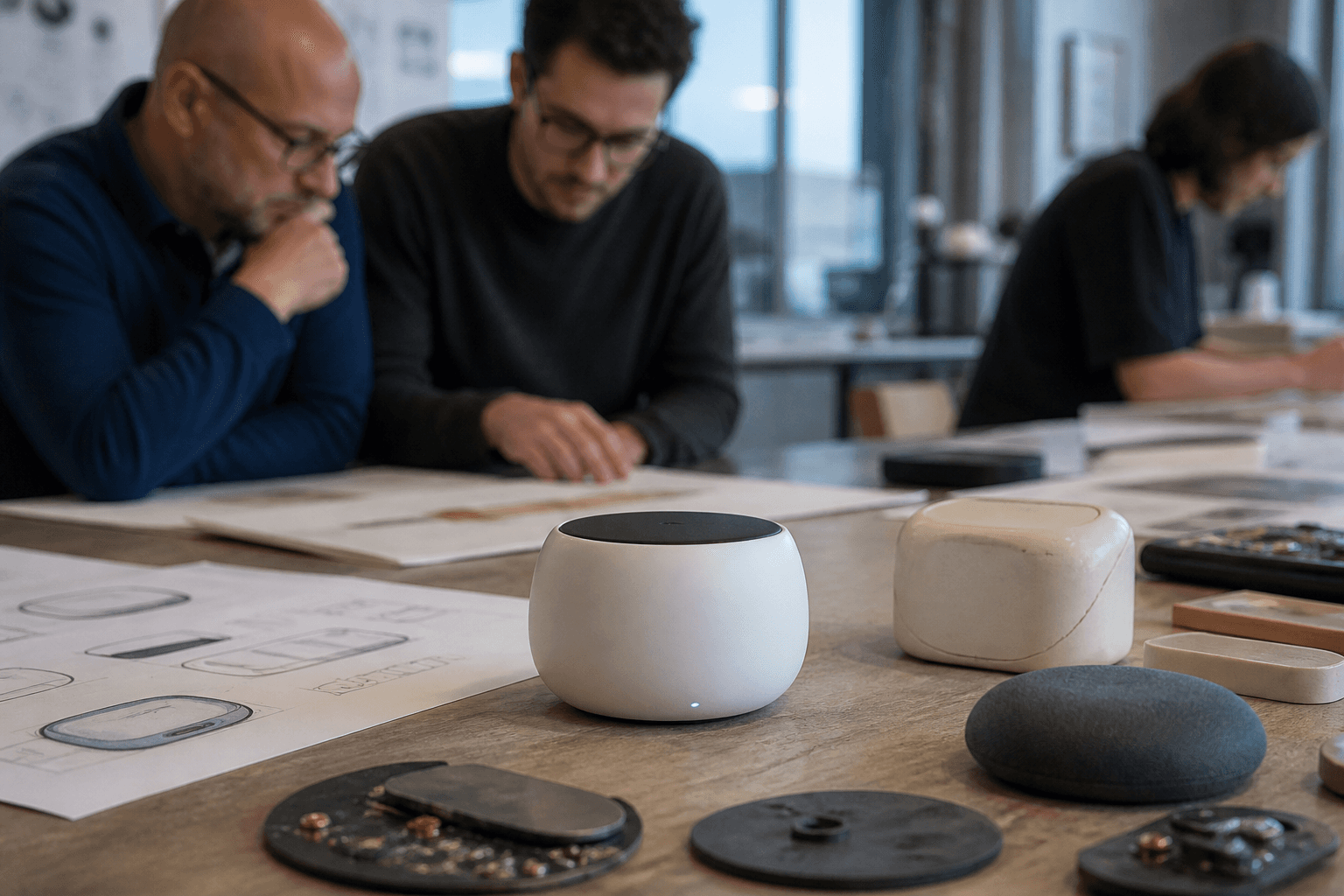
OpenAI's hardware project has crossed an important line in the public imagination. For more than a year, the partnership with Jony Ive risked sounding like an idea investors liked more than consumers could picture. That is no longer true. OpenAI's own letter about combining with io made clear that the company was not just hiring a celebrated designer but building a dedicated device effort around him, with the goal of moving artificial intelligence out of phone and laptop windows and into an object designed for everyday use. The latest reporting has started to give that effort a physical shape, which matters because product stories become more serious once outsiders can describe what a company is actually trying to ship.
What has emerged is a project that looks both more concrete and more complicated than the early mythology suggested. The Verge reported this month that OpenAI's first device with Ive is expected to resemble a small screenless smart speaker, with cameras, sensors and a portable form factor that turns voice and ambient awareness into the main interface. That kind of product would fit the company's larger ambition to build an always available assistant rather than another conventional gadget. But the same reporting also pointed to a harder calendar, with shipment expectations slipping into early next year even as the product direction becomes clearer. A second Verge report this week, focused on the internal reshaping around Greg Brockman, suggested that OpenAI is concentrating more authority over product and execution at the same moment it is still trying to prove that consumer hardware deserves a place beside enterprise software and core model work.
That mix of clarity and timing risk is exactly what prediction markets are pricing. On Polymarket's visible Breaking Tech board today, the year end OpenAI hardware contract sat fourth with roughly a thirty percent implied chance of success after a sharp recent move higher. Traders are acknowledging that this is no longer a purely speculative concept. The company has the designer, the dedicated hardware story and a more legible first product thesis. Even so, the odds remain well below even, which suggests the market still doubts OpenAI can both unveil and launch a new consumer device before the calendar runs out.
The next step is what will determine whether the project graduates from curiosity to product category. OpenAI does not need to prove that people are interested in an Ive designed artificial intelligence device; that part is already visible. It needs to show that the hardware can do something phones and smart speakers do not already handle well enough, while avoiding the fate of other ambitious voice first gadgets that generated fascination before running into behavior, battery and privacy limits. If Brockman really is absorbing more direct control over product execution, then the device effort is entering a more accountable phase. That may make a focused launch more plausible, but it also shortens the list of excuses if OpenAI reaches the end of the year with a story everyone can describe and nothing ordinary users can actually buy.