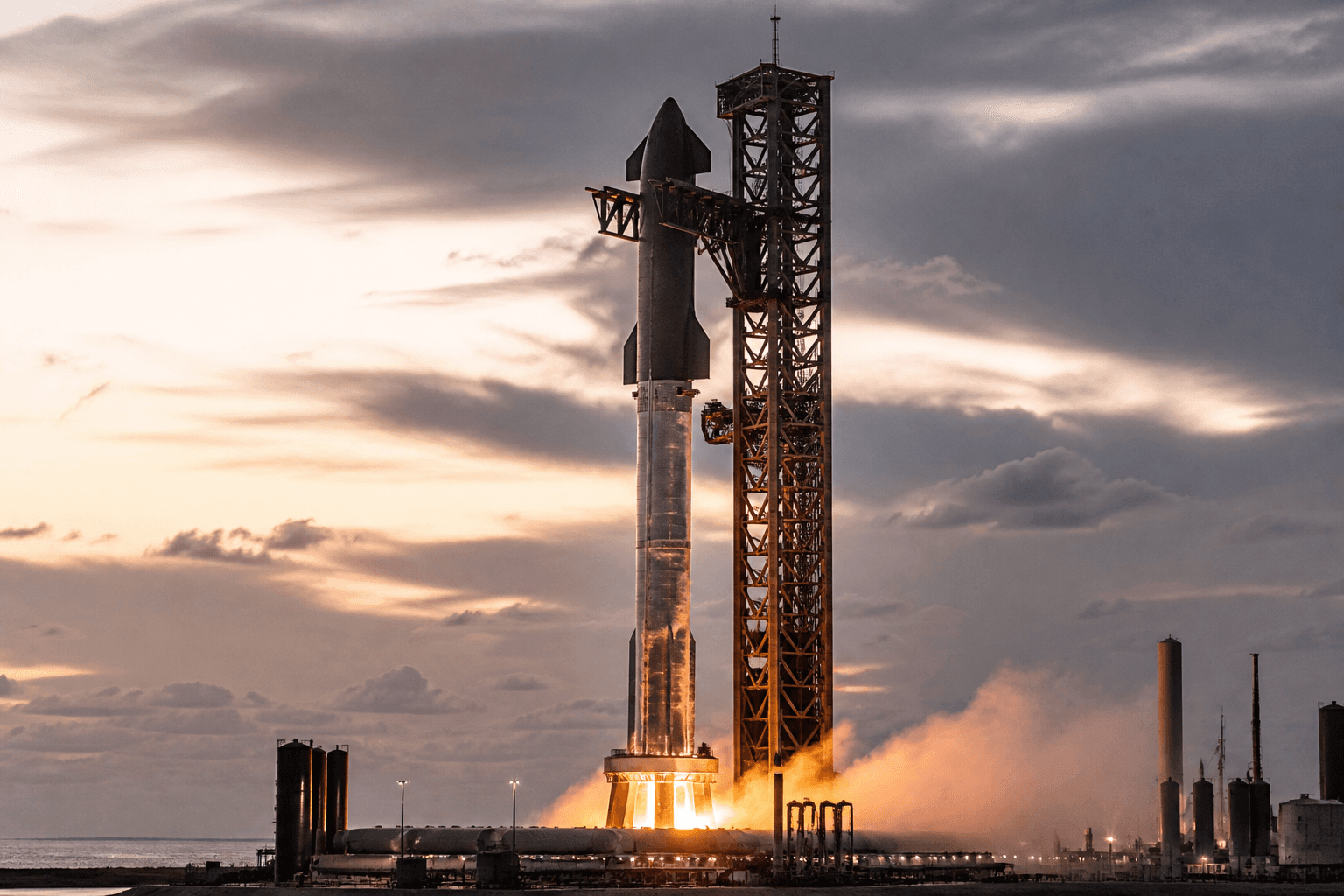
SpaceX is still moving Starship Flight Fourteen toward the pad, but the latest signs from South Texas point to a schedule that is drifting out of August and into September. That shift matters because this is not expected to be a routine repeat of the company's recent tests. Flight Fourteen is widely viewed as the mission that could turn Starship's upgraded hardware from an experimental promise into a more credible orbital system, with a new upper stage, more demanding reentry goals and another chance to prove that lessons from the previous flight can be converted into faster operational progress. The company has continued engine work and other preparations at Starbase, yet the remaining steps now look more consistent with a September attempt than with a last minute push before the month runs out.
The freshest evidence came last week, when SpaceX conducted additional static fire tests on Ship Forty One as part of the final proof campaign for the vehicle expected to fly next. Those tests suggest the hardware flow is still active, but they also underline how much work remains before launch. Engineers are not just trying to get another giant rocket off the ground. They are trying to stage the first orbital flight in this phase of the program while folding in what they learned from Flight Thirteen, whose upper stage survived reentry and splashdown far better than many earlier attempts. SpaceX had once hinted at even bolder recovery ambitions for the next mission, yet expectations have eased as the company balances speed against the need to avoid turning a signature test into a preventable setback.
Regulatory context adds another layer. The Federal Aviation Administration has been processing the broader framework that governs Starship operations from Boca Chica, and every major flight still sits inside that public oversight structure even when the pace of testing is set by SpaceX. For the company, each extra week before liftoff is frustrating but not meaningless. A delayed orbital attempt can still be strategically valuable if it improves the chances of collecting cleaner flight data, validating recovery changes and keeping NASA and commercial customers confident that Starship is progressing toward regular use instead of lurching from spectacle to spectacle. That is especially important because Starship is supposed to become more than a prototype. It is central to SpaceX's plans for heavy lift launches, satellite deployment and eventually lunar missions.
Prediction markets have started to mirror the calendar reset more clearly than the launch hype. On Polymarket, the chance of Flight Fourteen launching before the end of August has fallen into long shot territory, while the probability of a launch by the end of September remains the dominant view. That split captures the real story better than any single countdown clock. The question is no longer whether SpaceX is preparing to fly. It is whether the company can turn visible technical progress into a near term launch window without cutting corners on a test that is supposed to prove Starship can finally move from dramatic experimentation toward repeatable orbital operations.