Tesla used a Cybercab event on September 3 to put a number on its driverless progress. Ashok Elluswamy, the company's vice president of Autopilot and AI, said Tesla had achieved one million miles of unsupervised robotaxi operation, the milestone it has been building toward since the service opened in Austin. The pace is the striking part. Tesla reported 380,000 unsupervised miles on its July 22 earnings call, which means roughly 620,000 arrived in about six weeks. Days earlier the company widened its Austin service area to about 288 square miles, a nine percent increase and its first expansion in roughly ten months. For scale, Waymo has reported 200 million autonomous miles.
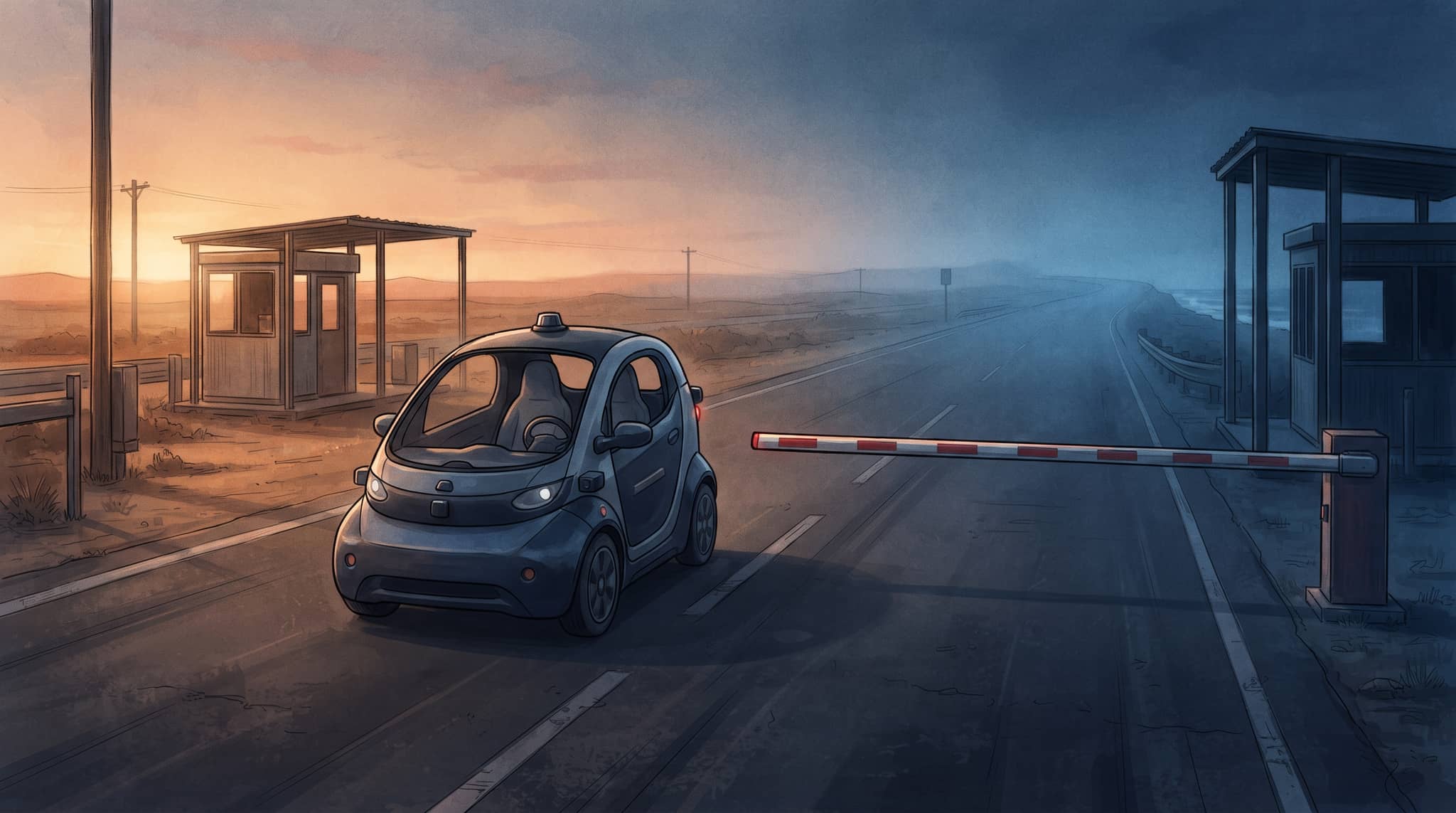
None of that progress has crossed the state line into California, and the reason is on file with the state. California's Department of Motor Vehicles publishes the list of companies cleared to operate autonomous vehicles, separated into three tiers: testing with a safety driver, testing without one, and full deployment. Tesla Robotaxi LLC appears only on the first list, which the department last updated on August 12. The driverless testing tier includes Waymo, Zoox, Nuro and WeRide. The deployment tier, the one that actually lets a company carry the public with nobody at the wheel, contains Mercedes-Benz, Nuro and Waymo. Tesla is on neither.
California regulators have been unusually blunt about what Tesla is doing in the Bay Area instead. Pat Tsen, deputy executive director for consumer policy at the California Public Utilities Commission, said in March that Tesla is not operating an autonomous vehicle service, explaining that the company's system is level two while the state's definition of an autonomous vehicle begins at level three. Tesla holds a charter-party carrier permit, the same authorization a limousine company gets. Asked about the person sitting behind the wheel, Tsen called that person "the driver. That is not a safety driver." In comments filed with the commission in February, Tesla acknowledged its service still relies on in-car human drivers and remote operators, while asking to keep marketing it with the word driverless.
That paperwork gap, more than any doubt about the software, is what the betting is about. The Polymarket contract on whether Tesla launches robotaxis in California by December 31 trades near 17 percent, inside the roughly 15-to-21 percent band it has held since opening around 24 percent at the start of July. The contract sets a specific bar: a service open to the general public, operating without a human actively controlling the vehicle, before the year ends. Traders are not really pricing whether Tesla's cars can do it. They are pricing whether a company that has not entered California's driverless permit process can finish it in under four months.
The sequence itself is the obstacle. A driverless testing permit from the motor vehicles department comes first, deployment authorization second, and separate approval from the utilities commission to carry passengers third, and Tesla has not publicly begun the first step. Each stage carries its own safety-data reporting, the kind Waymo and Zoox already file and Tesla currently avoids because its Bay Area service is not classified as autonomous. The practical tell for anyone tracking this will not be another mileage announcement out of Austin. It will be Tesla Robotaxi LLC appearing on the driverless testing list, or an application surfacing in the commission's autonomous vehicle passenger program. Neither has happened as of this week.