President Trump says he will meet with Abdul El-Sayed, the Michigan Democrat he spent the fall attacking, to talk about a plan to give every American government health insurance under the president's own name. In an Oval Office interview with the New York Post on Tuesday, Trump said of El-Sayed, "He's a smart guy," and added, "He did a good job. He actually did a very good job." He said he knew they would be meeting and suggested there might be some place in the middle they could go. He gave no date. El-Sayed, a physician and former Detroit health director, was elected to the Senate on Nov. 3 over the Republican Mike Rogers and will be the chamber's first Muslim member.
The idea began as a dare. Three days after the election, El-Sayed said in an interview that he would be fine with calling Medicare for All "Trumpcare for all" if that got it signed. On Nov. 12 he posted a mock-up of a gold insurance card carrying the president's name and signature and wrote, "Donald, this is on the table." The White House first dismissed the proposal as a socialist takeover. Then, on Saturday, Trump reposted the card without comment. NBC News reported that Vice President JD Vance's office had contacted El-Sayed's team about a meeting, and El-Sayed told NBC's "Meet the Press" that nothing would be a better legacy than "the ultimate Trump card."
The tone is a long way from October. At a rally in Port Huron, Trump said he had come to keep a "jihadist Muslim Brotherhood member" out of the Senate, and he called El-Sayed a jihadist lunatic during the campaign. There is no evidence that El-Sayed belongs to the group, and he has denied it. El-Sayed in turn accused the president of hateful rhetoric. Republicans still oppose a single-payer system. Sen. John Kennedy of Louisiana said on NBC that anyone who thinks turning health care over to the federal government would make it cheaper is mistaken, in blunter words. House Democratic leader Hakeem Jeffries, who is poised to become speaker, does not support Medicare for All, and the Congressional Budget Office has estimated that such a system would cost trillions of dollars.
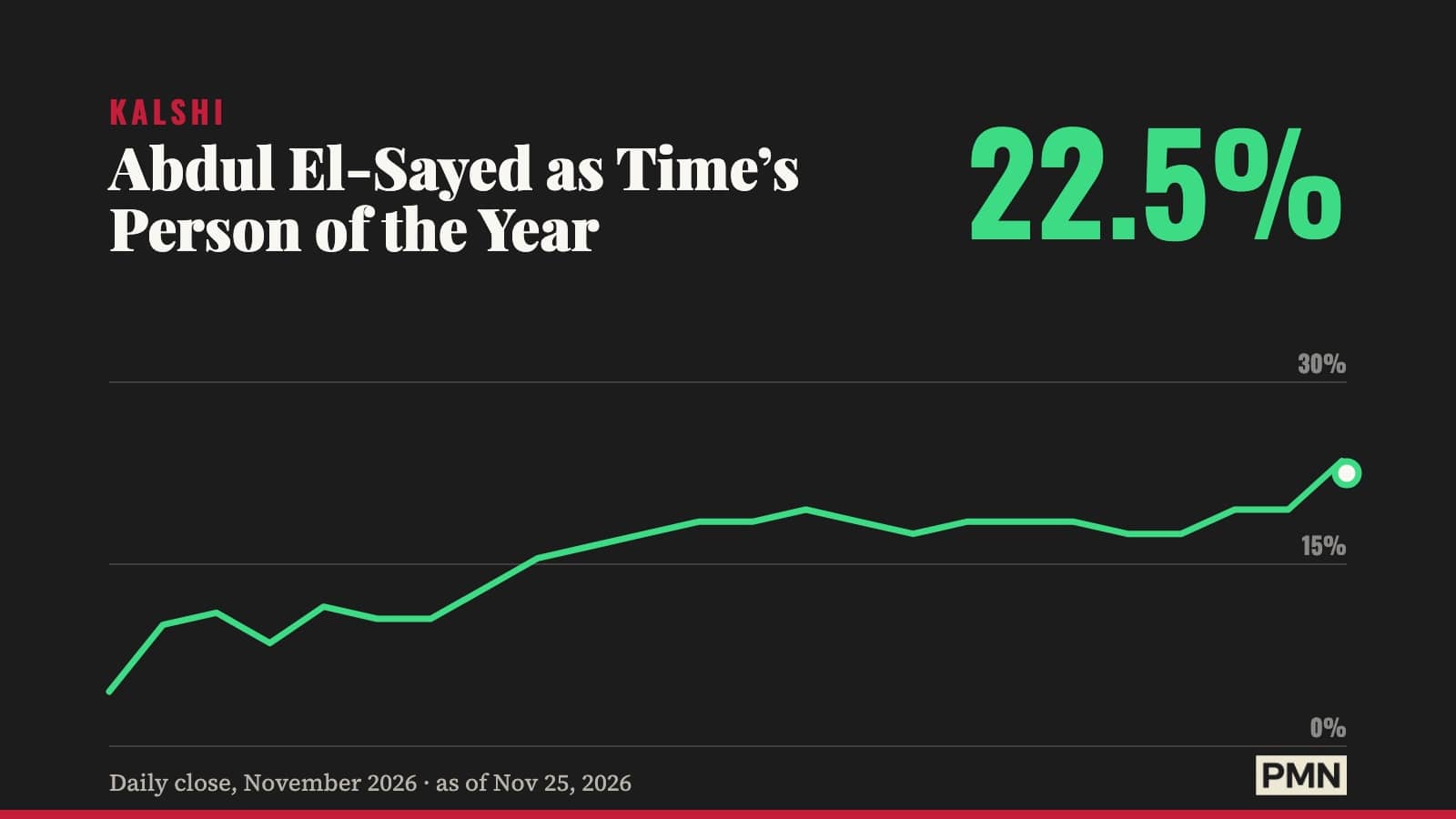
One sign of how far El-Sayed's profile has risen is a Kalshi market on Time magazine's Person of the Year. Traders gave him a 4.5 percent chance on Nov. 1, two days before the election. By Tuesday night, after the president's remarks, he was at 23.5 percent, behind only James Talarico, the Texas Democrat. On Wednesday afternoon the market put El-Sayed at 22.5 percent. The price says nothing about whether a health bill can pass, and Time has not named its choice.
The next step is a date for the meeting, which neither side has announced. Democrats take control of both chambers in January, and the president has said he plans to veto their bills until they come to negotiate. That makes the first weeks of the new Congress the likely test of whether the gold card becomes a negotiation or stays a post. El-Sayed has said he does not care about the name. Any bill would still need the House, the Senate and a signature.