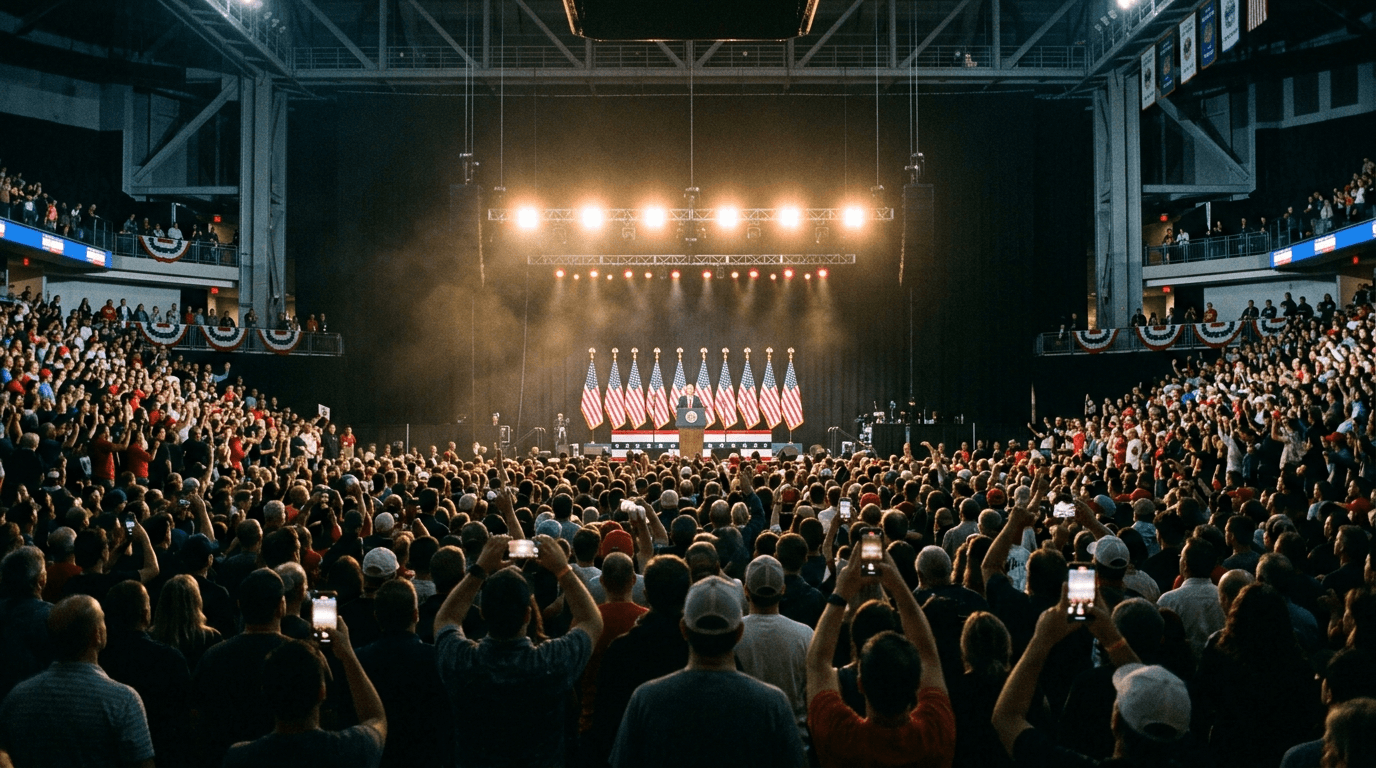
Donald Trump’s clemency power returned to public view at an Alaska rally, where he announced pardons for three co-owners of a vehicle-repair shop. The grants answer the narrow question of whether he would pardon anyone by the end of October. They do not establish whether more pardons will follow before year-end, or what principles might guide them. The distinction matters: a completed grant answers a question about whether clemency would occur, but says little on its own about the next decision or the reasoning behind it.
The case involved a Clean Air Act violation. The co-owners had pleaded guilty, according to USA TODAY, and the prosecution concerned tampering with emissions-monitoring devices and removing pollution-control equipment from vehicles. The report says the service affected at least 37 vehicles and that the company collected some $100,000 for the unlawful work. Trump described the grants as an unconditional pardon and said he had reviewed the case. Those details make the grants more than an abstract question about presidential power: the underlying conduct concerned pollution controls on vehicles, while Trump’s description presented the prosecution as unfair.
That record matters alongside Trump’s account of the case. He framed the prosecution as unfairly targeting mechanics; the report describes guilty pleas and conduct involving emissions controls. The available reporting does not settle the merits of Trump’s decision, explain why he granted clemency, or show that the rally announcement was driven by electoral considerations. The setting may draw attention, but it is not evidence of motive. Nor does the reported case establish a general standard for future clemency decisions. Without further evidence about the selection of recipients or the reasons for the grants, it would be premature to treat this episode as proof of a consistent policy.
The remaining uncertainty is broader than the October deadline. On Polymarket, traders put the chance of a pardon by year-end at 81% as of 9:00 a.m. ET on Oct. 20. The price was unchanged over the past week, and the market recorded $564 in trading over the last day. That trading volume is modest; the figure is evidence of what this market currently indicates, not a forecast or an objective measure of the likelihood. The contract’s trading deadline is Dec. 31, but the question it asks is whether a pardon happens by the end of the year. A price is useful here as a snapshot of trader belief, not as an explanation of the president’s choices or an answer about who might receive clemency.
The nearer-term contract asks whether Trump would pardon anyone by the end of October. It stands at 32% as of 9:00 a.m. ET on Oct. 20, with just $8 in trading over the last day. The reported Alaska pardons have already answered that question in the affirmative, though the thin trading makes the quoted price a poor measure of how broadly traders have engaged with it. What remains unresolved is whether the grants mark a continuing use of clemency, and what criteria—if any—will shape future decisions. The available reporting offers no answer, so the year-end market is best read as a narrow snapshot of trader belief, not a verdict on Trump’s policy. The essential distinction is between what happened in this case and what may happen next: the first is reported, while the second remains uncertain.