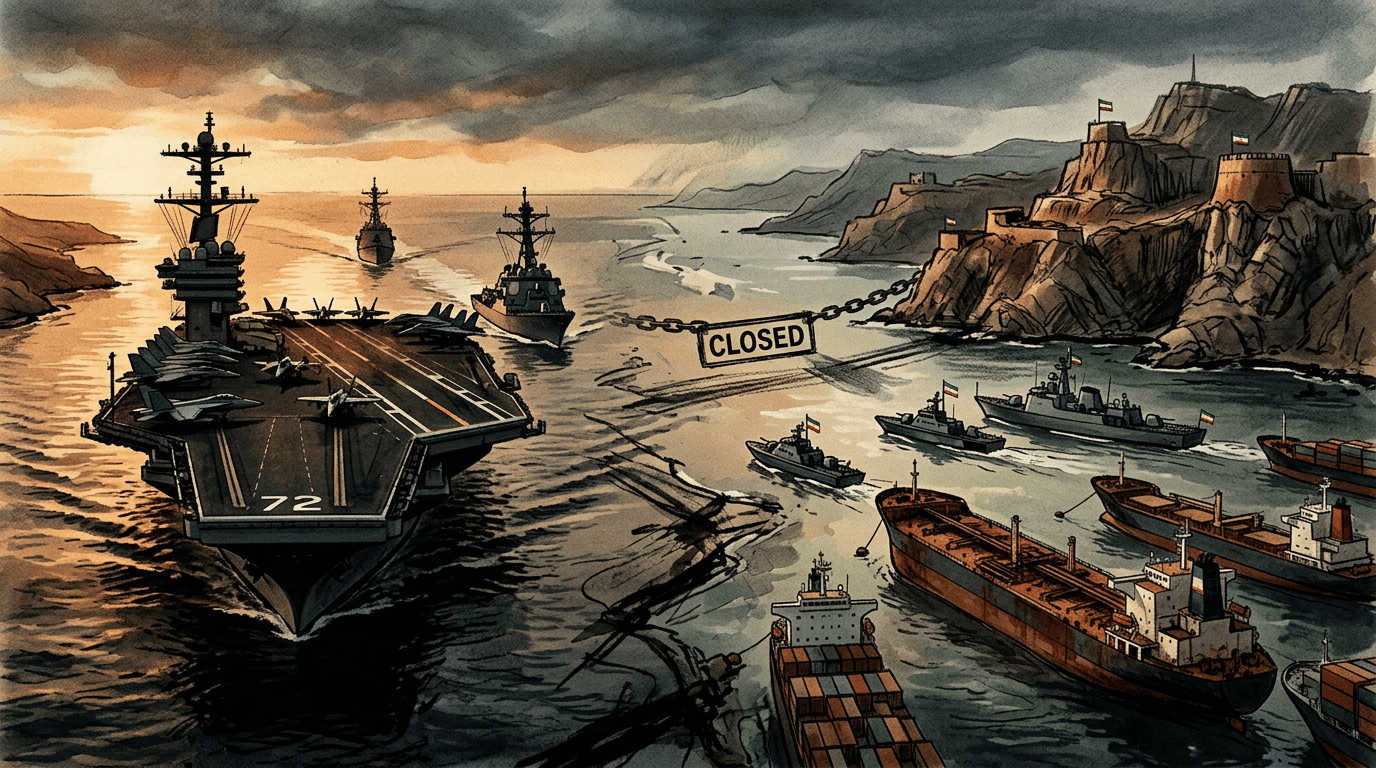
A 60-day interim agreement between the United States and Iran expired on August 17, 2026, without progress on reopening the Strait of Hormuz or launching nuclear negotiations. The deal had temporarily halted broader hostilities but failed to produce any framework for managing the strategic waterway, which has seen a sharp drop in vessel traffic since earlier this year.
U.S. President Donald Trump said on August 18 that no talks with Iran were underway and insisted the strait remained open, contradicting Iran's position that it is closed. The conflicting assertions have deepened uncertainty for global shipping and energy markets. Oil prices rose and bond yields hit multi-decade highs on August 18 as investors priced in an extended closure of the strait.
The expiration leaves the diplomatic landscape fragmented. While the U.S.-Iran track is stalled, separate negotiations between Oman and Iran over a bilateral strait-management agreement have drawn attention. Such a deal, which could define vessel traffic corridors or fee collection policies, is the subject of a prediction market that currently assigns a 62.5% probability of an announcement by September 30.
No independent reporting has confirmed the existence or specific terms of an Iran-Oman agreement. The available evidence focuses on the broader impasse between Washington and Tehran, with diplomatic engagement limited and the war unresolved. The Omani track appears to be one of the few remaining avenues for a potential breakthrough, though its status remains unverified.
The next development to watch is any official announcement from Iran or Oman regarding a bilateral accord, or a credible news report citing diplomats involved in the talks. Without such confirmation, the diplomatic picture remains defined by the expired U.S.-Iran pact and the competing claims over who controls passage through the Strait of Hormuz.