Markets now assign a 10.5 percent probability to a Federal Reserve rate hike at the July 2027 FOMC meeting, reflecting deep uncertainty among forecasters about the central bank's next move. The implied odds fell 22 percentage points in the past 24 hours on volume of $33, underscoring the fragility of consensus as traders digest conflicting signals from major Wall Street research desks.
J.P. Morgan Global Research projects the Fed will remain on hold through 2026 before delivering a 25 basis point hike in September 2027, viewing tightening as the most likely next step and noting risks are tilted toward an earlier move in the second half of that year. By contrast, BofA Global Research recently pushed back its forecast for rate cuts, now expecting two quarter-point reductions in July and September 2027—a shift from its previous call for cuts starting in September 2026. The divergence highlights how sensitive policy expectations are to incoming inflation and labor market data over the next 12 months.
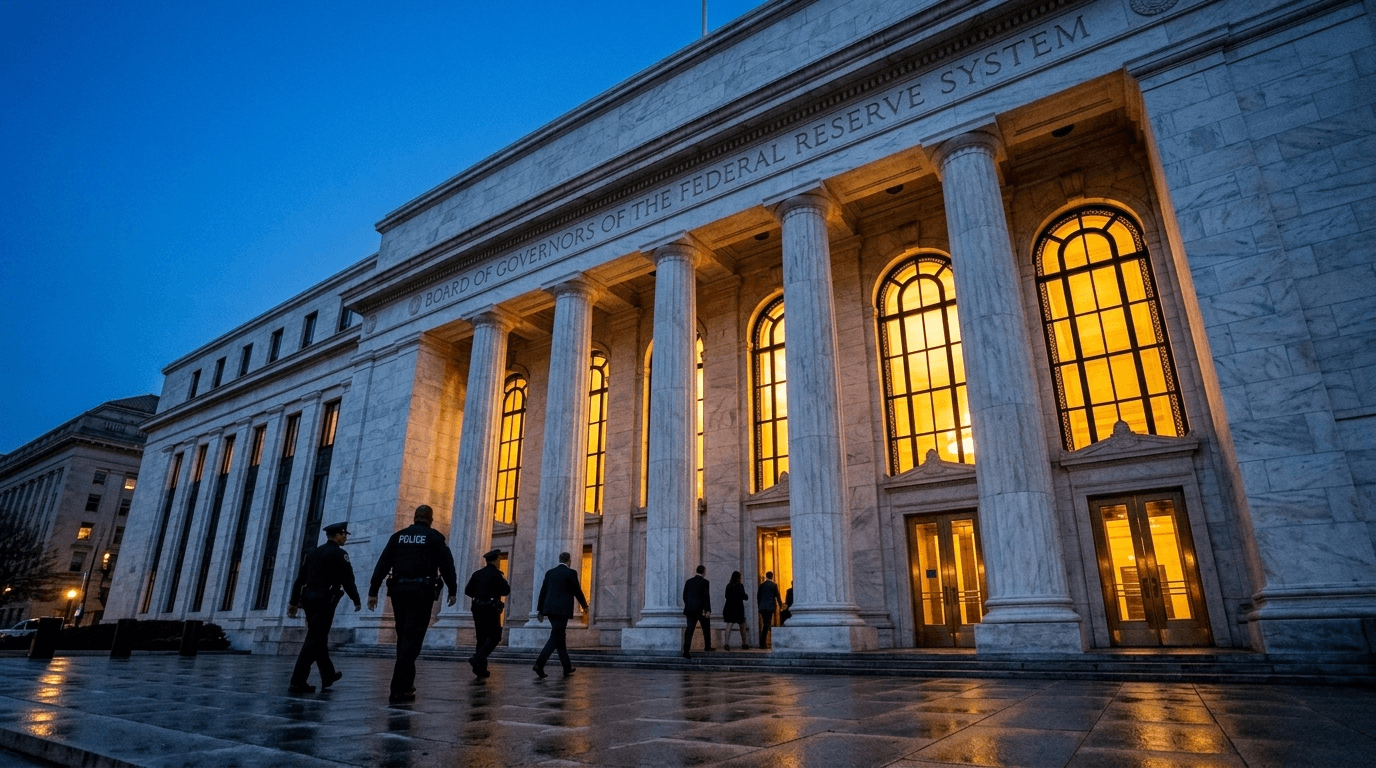
The Federal Reserve has held the federal funds rate at 3.50 to 3.75 percent since its March 2026 meeting, following late-2025 cuts that brought the effective rate to around 3.64 percent. Minutes from the April 29, 2026 FOMC meeting show that almost all members agreed to maintain the target range, and the June 17, 2026 decision was unanimous with a 12-to-0 vote. The July 2027 meeting is scheduled to run from July 26 to July 28, 2027, one of eight regularly scheduled two-day sessions that year, with the policy statement due at 2:00 p.m. Eastern Time on the final day.
BofA's revised view implies that cuts should be "in play by next summer" once inflation nears the Fed's 2 percent target, directly contradicting J.P. Morgan's September 2027 hike forecast. The existence of a prediction market with double-digit hike odds—despite the sharp recent decline—suggests traders see non-negligible risk that inflation proves stickier than consensus expects, forcing the central bank to resume tightening before the end of next summer.