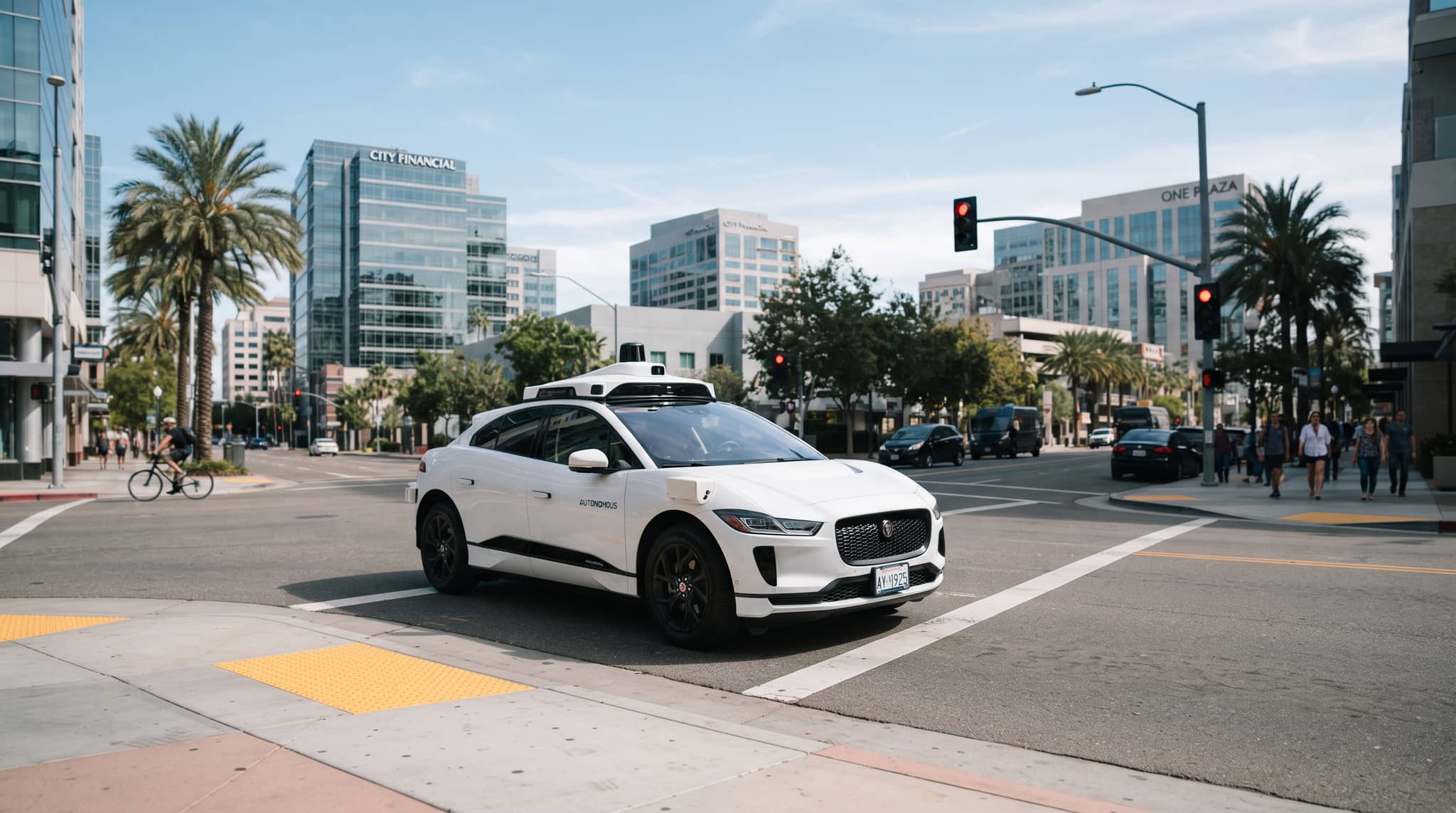
Waymo opened its robotaxi service to the public in Denver, San Diego and Tampa on September 1, extending the Alphabet subsidiary's commercial footprint to 14 US cities. Riders in the three new markets are being invited on a rolling basis rather than all at once, the same staged opening the company has used since Phoenix. The move matters beyond the three metros involved. It marks the point where Waymo stops looking like a company running a handful of showcase deployments and starts looking like one operating a genuine national network, with a fleet of Jaguar I-Pace vehicles and a newer minivan called the Ojai now numbering more than 4,000 cars.
Getting to 14 took most of the year. Waymo began 2026 with paid service concentrated in Phoenix, San Francisco, Los Angeles, Austin and Atlanta, then added Miami, Dallas, Houston, San Antonio, Orlando and Nashville in waves through the spring and summer. Every launch has followed the same sequence: mapping, supervised testing, employee-only rides, then a gradual public opening. The interval between those steps has compressed as the company has repeated the process, and the three September additions had been named as targets the previous autumn, making them the first cohort to land roughly on the timetable Waymo set for itself.
The harder part is what comes next. Waymo's own list of upcoming markets now runs sixteen US metros deep, including Las Vegas, Detroit, Washington, Seattle, Chicago, Boston and New York, with London, Tokyo and Munich queued abroad. That backlog is far longer than the remaining calendar can absorb, and the binding constraint is no longer engineering. Nevada regulators cleared Waymo in late August to charge for driverless rides in Clark County and authorized as many as 1,000 vehicles there over the following year, yet a permit is not a launch, and the company has not said when Las Vegas riders will be able to hail a car. Several other cities on the list sit in jurisdictions still writing the rules that would let a vehicle operate with nobody in the driver's seat.
Prediction markets have been trying to price precisely that gap. A Polymarket event asking how many cities Waymo will serve on December 31 currently puts the 16-to-19 band a little ahead of the 12-to-15 band that today's count falls into, implying traders expect at least two more openings by year-end but not the full sweep the upcoming list might imply. The pool is thin enough that single trades visibly move it, so it is better read as a rough consensus than a precise forecast.
The nearest test is Las Vegas, where the regulatory work is done and only the operational rollout remains. Detroit, where Waymo has been mapping and testing for months, is the other launch that could plausibly land before the end of December. Washington is the harder case and the more consequential one, because a service running in the capital would put driverless cars in front of the federal officials now weighing national rules for them. What the next four months actually measure is not whether Waymo can build the technology, which it has now demonstrated in fourteen markets, but how fast a city can be persuaded to let it operate.