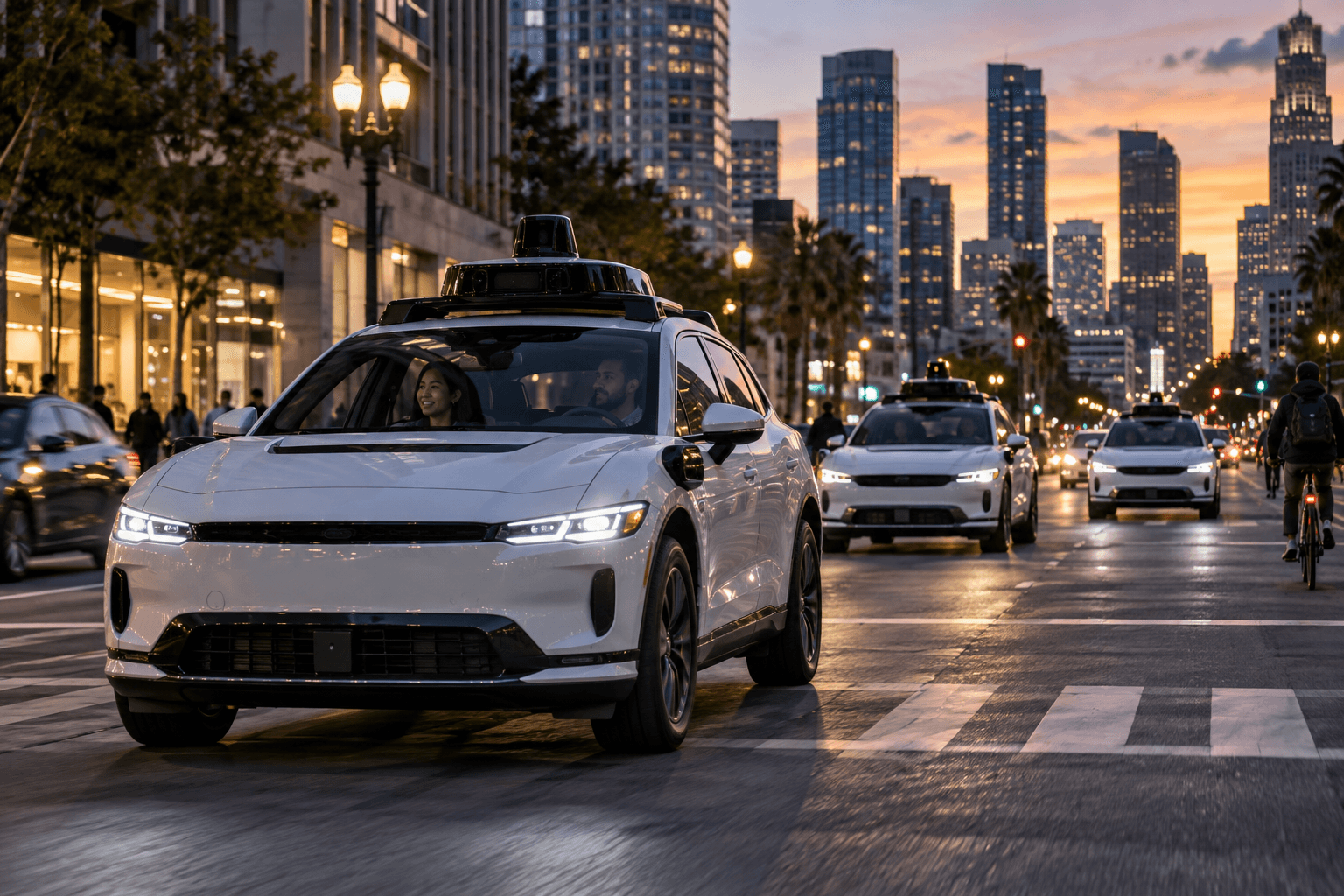
Waymo is accumulating miles and adding riders across a widening map, but the company’s geographic expansion still depends on the difficult transition from supervised testing to a driverless service that anyone can book. The Alphabet unit said in September that it had begun welcoming riders in Denver, San Diego and Tampa. In Philadelphia, its vehicles have logged more than 150,000 autonomous miles, according to the latest public reporting, even though the city remains a testing market rather than a full commercial launch.
The distinction matters because Waymo’s expansion announcements do not all describe the same level of access. Its September launch post said the three new cities would receive riders gradually while the company worked toward broader availability. An S&P Global mobility analysis described a roadmap aimed at expansion to at least 20 markets internationally, but access in any one place can still be limited by invitations, service boundaries or partner arrangements. Philadelphia demonstrates the long runway between collecting operating data and opening a service to the general public. Regulators, mapping work, fleet supply and local road conditions can all slow that handoff.
Prediction-market pricing has become more cautious despite the visible rollout. A Polymarket contract gave roughly a 70% chance that Waymo will have public driverless service in fewer than 12 cities or regions at the end of December, an increase of about 18 percentage points over 24 hours. The next range, 12 to 15, traded near 25%. The contract counts only places where members of the public can book a driverless vehicle through Waymo One or a partner such as Uber; employee tests and invite-only pilots do not qualify. That narrower definition helps explain why a broad announcement count can exceed the number recognized by the market.
Waymo has strong reasons to proceed carefully. A robotaxi launch must work through weather, airport rules, emergency response, difficult road geometry and interactions with human drivers before it can scale. Each new city also requires vehicles, maintenance capacity, remote support and a service area large enough to be useful. Expanding an existing market can add rides more efficiently than opening another dot on the map. That tradeoff is especially important as the company pursues a goal of one million weekly paid trips while introducing a new generation of vehicles.
The next test is whether the September cities move from controlled access to general booking before year-end and whether Philadelphia progresses beyond testing. Public openings in even a few of those markets would materially change the city count, while delays would reinforce the case that Waymo is prioritizing depth over breadth. The company’s mileage and rider growth show that the technology is moving into everyday transportation. The unresolved question is how quickly that operating scale can be repeated under the rules, streets and expectations of each new city.