XPENG has put a new financial marker on China’s humanoid robot race, announcing that its robotics business has secured more than $900 million in its first outside funding round. The transaction values the unit at more than $6.3 billion after the investment and, according to the company, is the largest single private financing yet in China’s embodied artificial intelligence sector. The money gives XPENG a substantial pool of capital for a task that has challenged robot makers around the world: moving from striking demonstrations to machines that can be produced consistently, deployed safely and trusted to perform useful work without constant human intervention.
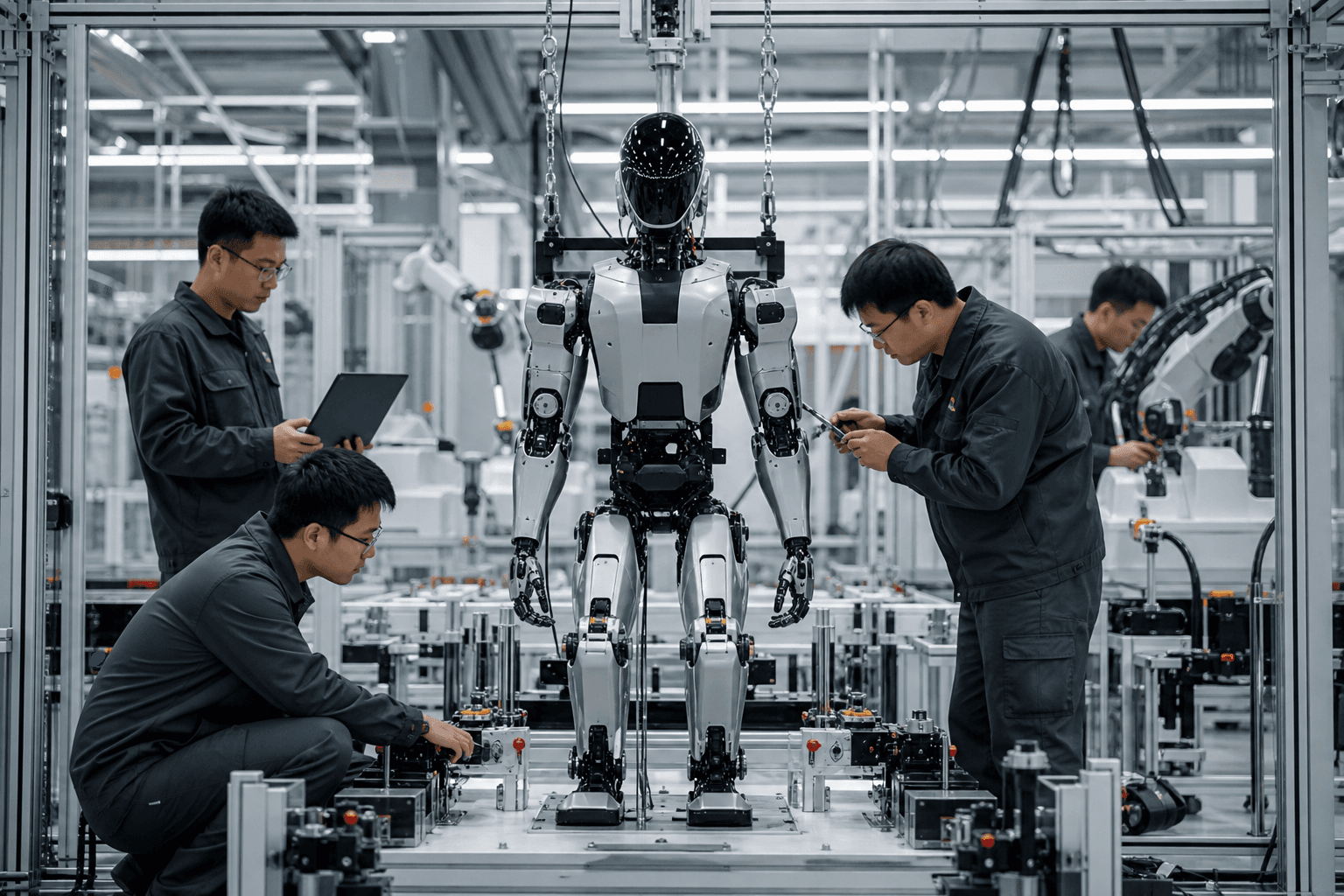
IDG Capital led the round, with Gaorong Ventures participating and Tencent and Alibaba joining as strategic investors. XPENG said it will retain control of the robotics business and use the proceeds for hardware and software development, physical AI training, data generation, production facilities and international expansion. Its next-generation IRON humanoid uses the company’s in-house chips and control systems, with 76 degrees of freedom across the body and 21 in each hand. XPENG says IRON should enter mass production by the end of this year, begin with deployments in company stores and campuses, and move toward deliveries in China and overseas in 2027.
The scale of the raise reflects how aggressively Chinese companies are trying to industrialize humanoid robotics. At the World Robot Conference in Beijing this month, manufacturers displayed machines intended for factories, customer service and other practical settings, while Unitree’s high-profile public listing added another sign of investor appetite for the sector. The fresh financing therefore arrives as both public and private capital chase the same production thesis. Yet the technical and commercial gaps remain wide. XPENG’s own timetable puts external deliveries in 2027, and the first planned assignments for IRON are controlled environments inside the company’s stores and campuses. Capital alone cannot establish whether the machines will maintain throughput, safety and uptime away from curated demonstrations. That makes reliability, cost and repeatable production more important than another polished stage appearance.
A live Polymarket contract offers a useful benchmark for how skeptical observers remain about near-term consumer humanoids. The contract on whether Tesla will make Optimus available for public purchase by December 31 implied only about a 3 percent chance on Thursday, despite intense investment across the industry. That contract does not resolve on XPENG and should not be read as a forecast of IRON’s production schedule; it is a sector proxy for the harder leap from internal trials to a product ordinary customers can buy. XPENG’s next proof point is more concrete: whether it can put IRON into repeatable production before year-end, then turn a record financing round into dependable commercial deployments during 2027.