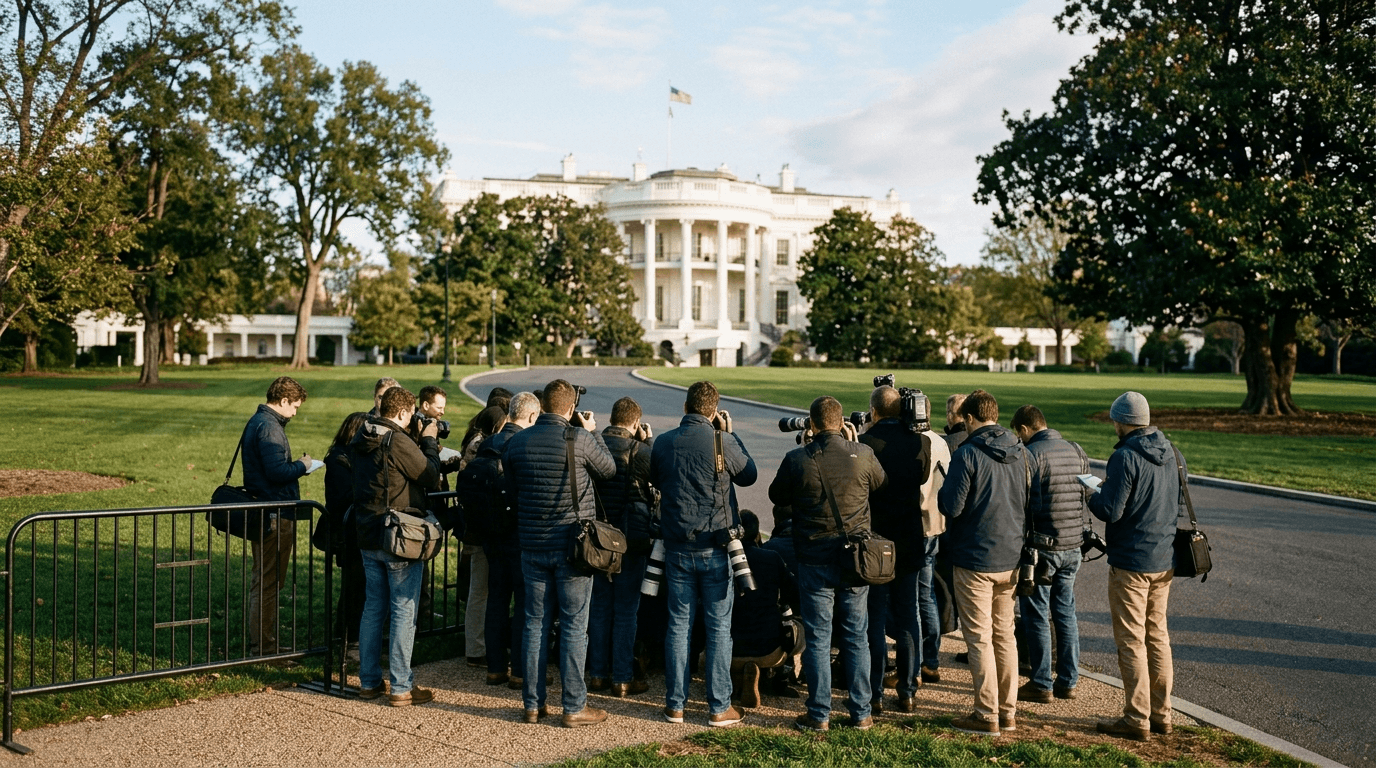
The White House press ban is on hold, but the legal dispute over journalists’ access is not resolved. A judge’s temporary order restored access for the affected outlets; it expires Oct. 8. The market asks whether the White House will announce an end to the ban before November, a question distinct from whether a court order keeps access in place. On Kalshi, traders put that announcement at 21% as of 10:00 a.m. ET on Oct. 2. The price was unchanged over the past day and week, and trading was limited: 47 contracts traded over the last day. That is a thin basis for treating the figure as a settled view of what the administration will do.
The underlying disagreement is about both access and the government’s power to decide who gets it. The White House says access is a privilege; the outlets argue that the ban violates their rights. The administration cites national security, while the judge questioned whether that was the actual motivation for removing access. A press-freedom lawyer says the White House may close a press forum, but not to retaliate against or disfavor particular viewpoints. Those competing positions leave the case’s outcome uncertain, and the temporary order does not amount to a permanent resolution.
The court’s order also has a narrower scope than the wider fight over covering the president. It applies to access to White House grounds, not CNN’s place in the presidential travel pool. CNN was excluded from a designated pool role, and the White House later removed the network from a press pool for a presidential trip after the judge blocked its effort to restrict the outlets’ access. The order therefore restored one form of access without settling who can travel with the president or take part in pool coverage.
That distinction matters because an announcement ending the ban and continued access under a temporary court order are not the same outcome. The outlets say they fear the administration could reinstate the ban if the court permits it. The administration, meanwhile, maintains that White House access is not an entitlement. The market tracks a formal announcement, not whether reporters remain able to enter under the judge’s order. Its price therefore cannot tell readers whether the court will extend the restraint, how access will work in practice, or whether the White House will voluntarily change its position.
For now, the clearest answer is that access has been restored temporarily while the underlying dispute continues. The market gives traders’ current view of an announcement before November, not an objective forecast of the legal case or a measure of how press access will function. With little trading behind the price and the order still temporary, the uncertainty remains the story: the White House could announce an end to the ban, or the dispute could continue through the courts without such an announcement.