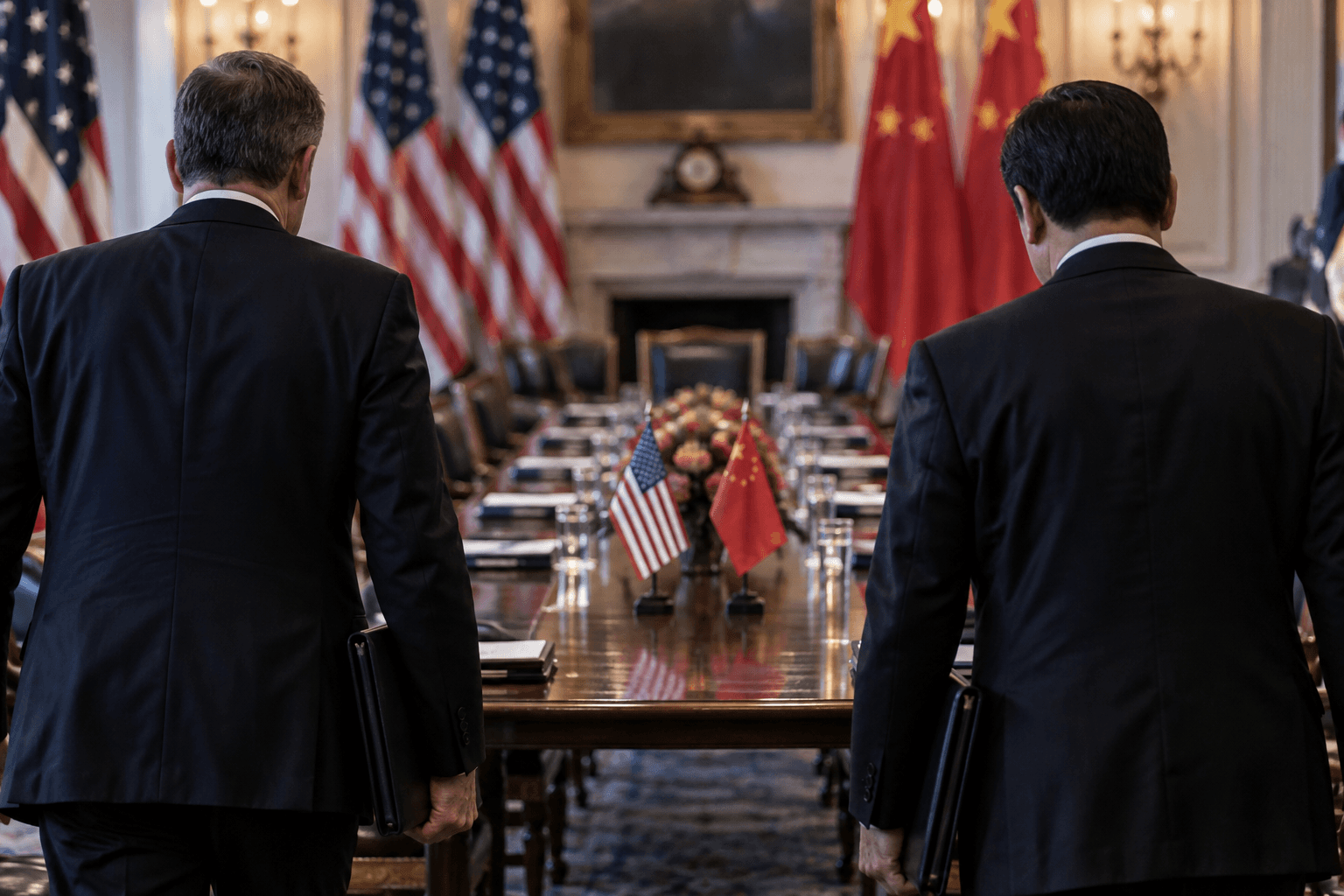
The ceasefire between the United States and Iran remains an uncertain backdrop to negotiations over fighting and access to the Strait of Hormuz. President Donald Trump said he rejected Iran’s latest proposal, which would have reopened the Strait and restarted talks over Iran’s nuclear program. The war has restricted energy shipments from the Middle East and raised concerns about inflation, so the outcome matters beyond the immediate negotiations. The public accounts describe proposals and contacts, but do not establish that the two sides have agreed on terms. (Sources: The Philadelphia Inquirer; CNBC.)
Iran’s foreign minister described a proposal that would pause fighting, including in Lebanon, for seven days. Under that account, the Strait would open on the final day of the pause, before nuclear negotiations resumed. Trump rejected the proposal, but said he remained open to negotiating. The sequence leaves the central issue unresolved: the accounts describe different positions on how a pause, access through the Strait and nuclear talks would fit together, rather than a mutually accepted agreement. (Source: The Philadelphia Inquirer.)
There is also an account of continuing diplomacy, though it does not demonstrate that negotiations have produced a breakthrough. A US official told Al Jazeera that mediated talks were ongoing and described them as constructive. That attributed description sits alongside Trump’s rejection of the offer: talks can continue while the sides have not settled the conditions for an agreement. The available accounts therefore support neither the conclusion that diplomacy has ended nor the claim that a deal is close. (Source: Al Jazeera.)
Polymarket traders put the chance that the ceasefire continues through the end of September at 90% as of 8:55 a.m. ET on Sept. 27. The venue recorded $354K in trading over the last day traded over the last day. For continuation through the end of October, the probability is 53%, with $72K in trading over the last day traded over the last day. The probability for the end of November is 38%, with $9K in trading over the last day traded over the last day, while the December contract stands at 33%, with $26K in trading over the last day traded over the last day. The later contracts have substantially less trading than the September contract. These prices describe traders’ current beliefs, not objective probabilities or forecasts; the contracts show differing confidence across the horizons, not what negotiators will decide. (Source: Polymarket.)
The market’s higher near-term price does not establish that the ceasefire will hold, just as lower prices for later dates do not establish that it will fail. The reported rejection is not proof that talks have stopped: Trump said he remained open to negotiating, and the US official described mediated contacts as ongoing. Separately, CNBC reported a claim from unnamed officials that Trump expected renewed bombing after the midterm elections, while saying it could not independently confirm the report. That account remains unconfirmed. What the sourced reporting does show is a rejected proposal, stated openness to further negotiation and an attributed account of continuing contacts. Whether those contacts can resolve the disagreements over a pause, the Strait and nuclear talks remains uncertain. (Sources: The Philadelphia Inquirer; Al Jazeera; CNBC.)