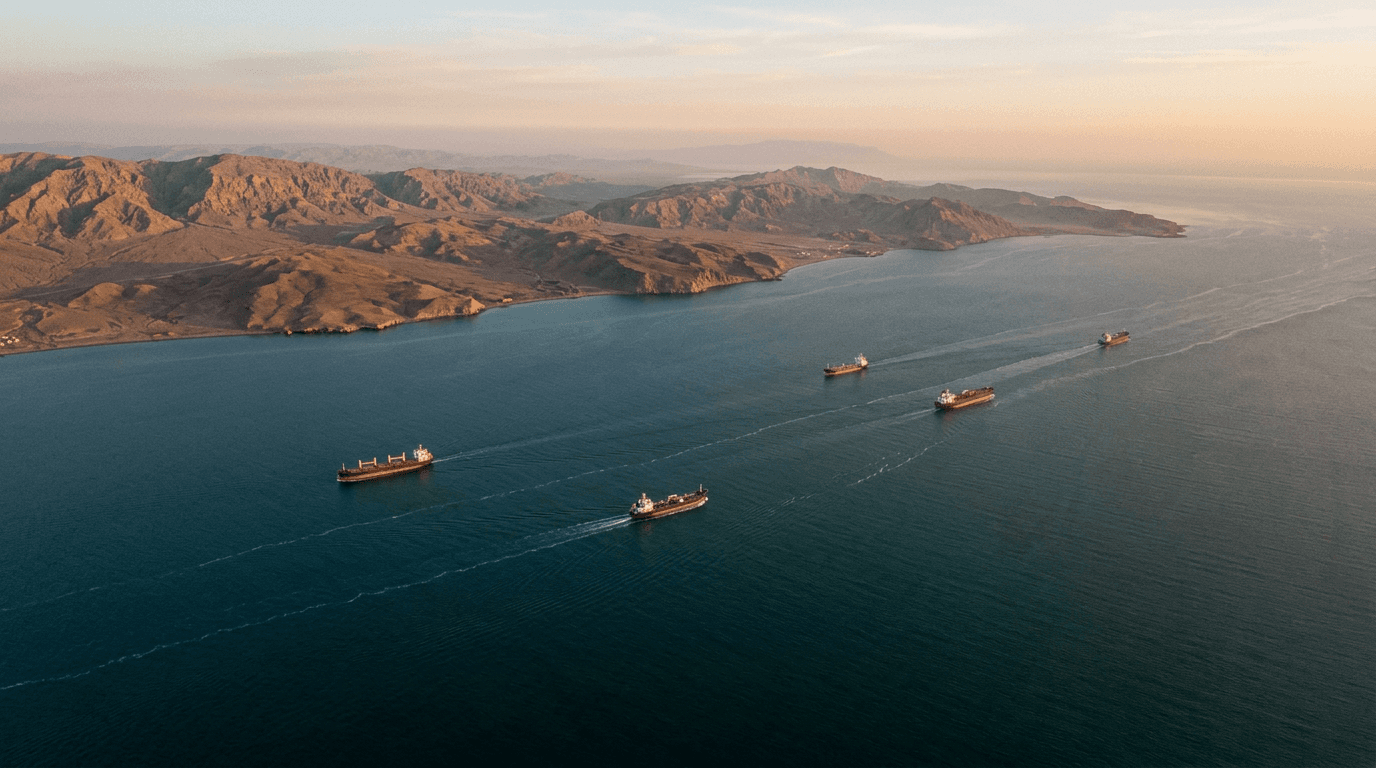
The Strait of Hormuz is a critical route for global oil, and the available evidence points to sharply disrupted traffic. But there is no complete, verified count yet for the week now under review. That gap matters: the market is asking for a precise total while the underlying picture is contested and the available tracking data may not capture every crossing. The market can show how traders weigh possible outcomes, but it cannot by itself establish how many ships passed.
On Polymarket, traders put the leading ship-count range at 38% as of 9:06 a.m. ET on Oct. 18, with the next lower range at 29%. The next higher range stood at 11%, while the outcome of fewer than twenty ships was at 24%. These figures represent traders’ current beliefs, not a verified count or an independent forecast. The market is split across several possible outcomes rather than pointing to a settled answer. Trading over the last day was $239 in trading over the last day for the leading range, $384 in trading over the last day for the next lower range, and $585 in trading over the last day for the next higher range. Those amounts provide context for the quoted prices, but the prices remain evidence of market belief, not a tally of crossings.
The latest complete weekly count cited by Lloyd’s List Intelligence covered a period in late September: 124 non-Iranian-linked transits. The same brief reported At least 13 attacks targeting tankers or gas carriers since late September. Those reports give context for the disruption, but they do not establish how many ships crossed during the week at issue. Nor is it clear from the available evidence whether the count’s non-Iranian-linked definition matches the contract’s resolution rules. A historical weekly total can inform the picture without answering a separate week’s question.
A live tracker cited a PortWatch count of 2 vessels against a typical 85 per day on a recent day. That is a single-day reading, not a count for the week at issue. The tracker said its weekly count lagged by days, and accounts of whether ships were transiting conflicted. It also described Hormuz as carrying close to a fifth of the world’s oil, underscoring why uncertainty about traffic can matter well beyond a market question. Still, the daily reading cannot be treated as a complete weekly total, and the cited count does not resolve how many ships crossed over the period the market asks about.
AIS-based tracking has a further limitation: vessels that cross with their transponders off may not appear in the count. A very low recorded figure should therefore not automatically be treated as proof that no ships passed, just as conflicting claims do not establish the true total. The market’s leading range is a snapshot of trader expectations, but the evidence available so far cannot confirm it. The distinction between what a tracker records and what actually happened is central here: the former is available in partial form, while the latter remains unresolved. Until a complete count is published and its vessel definition is clear, the number of ships that crossed during the week remains unknown.