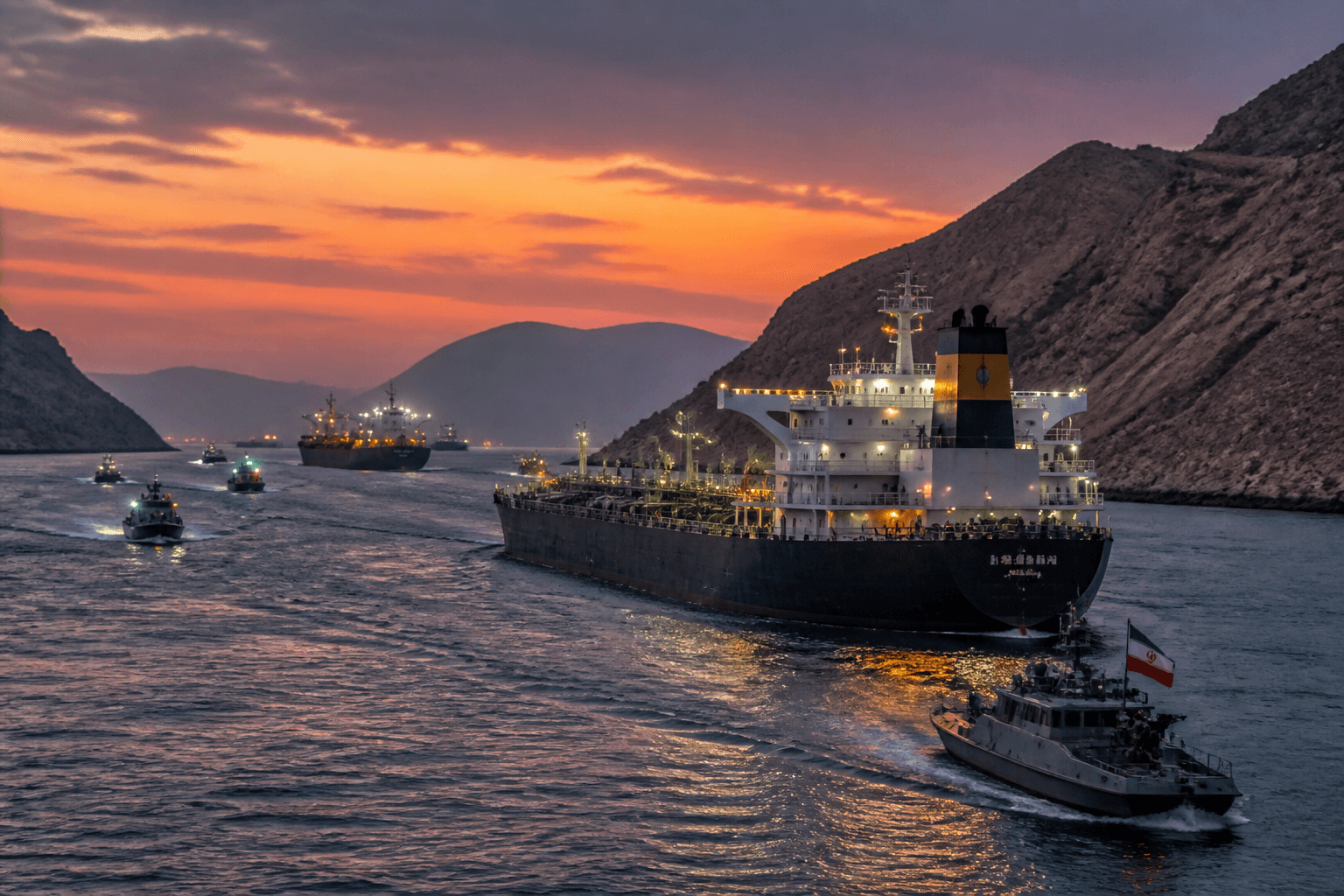
Efforts to reopen the Strait of Hormuz moved back into focus on Tuesday as Iran and Oman held talks in Tehran over a temporary plan to manage commercial traffic through one of the world's most important energy chokepoints. The meeting mattered because the waterway has remained badly impaired for months, with Iran still exerting tight control over passage after the war that began earlier this year. Any sign of practical progress carries global weight, not just for oil exporters and shipping groups, but for governments trying to prevent a fragile regional truce from collapsing into another round of confrontation.
The immediate reason the story regained urgency was that diplomacy arrived alongside a fresh reminder of how unstable the route remains. The Associated Press reported that the Iranian and Omani talks centered on a temporary navigational corridor and demining work meant to create a safer path for ships, but the same report also said a tanker was disabled off Oman after being struck by an unknown projectile. That combination captured the contradiction hanging over the strait: negotiators are trying to sketch out a managed reopening, yet the basic security conditions needed for ordinary commerce are still missing. Earlier AP reporting on August 17 showed the same effort was already entangled with Washington's demand for freer access through Hormuz before any broader easing of pressure on Iran.
Prediction markets reflected that mixed picture rather than a clean breakthrough. On Polymarket, the visible ladder tied to a U.S. announcement ending the Iranian blockade still priced a September resolution below even odds, with the September 30 contract near forty percent and the October 31 contract around the low sixties. On Kalshi, traders were even more cautious about traffic returning to anything close to normal in the near term: the contract asking whether the seven day moving average of transit calls will get above sixty before October opened around six cents, while the comparable November bracket sat near thirteen cents. In other words, traders have not ruled out progress, but they are still treating quick normalization as a long shot.
That skepticism lines up with the public evidence. IMF PortWatch continues to track the Strait of Hormuz as a disrupted chokepoint rather than a route that has decisively recovered. The issue is not only whether Iran and Oman can agree on a formula for safe passage, but whether shipping companies, insurers and regional governments believe that formula will hold for more than a few days at a time. A temporary corridor, even if it is announced soon, would still have to survive mine clearing, enforcement disputes, retaliation risks and the larger political fight over U.S. sanctions and maritime pressure on Tehran.
The next few days now matter more than another vague promise of progress. If Tehran and Muscat can turn Tuesday's discussions into a workable operating plan, markets may start to pull the reopening timeline closer. If more ships are hit, or if Washington and Tehran harden their positions again, the current optimism will look premature. For now, the central story is not that Hormuz is back. It is that diplomats are trying to build a narrow route toward normal commerce while the facts on the water still argue for caution.