The 119th Congress has introduced at least five bills targeting artificial intelligence safety, but none that impose the mandatory restrictions defined in a widely watched legislative benchmark have advanced beyond committee referral or markup. The clock is running with five months left in the session.
The GUARDRAILS Act (H.R.8031), introduced March 20 by Rep. Donald Beyer (D-VA), was referred to the House Energy and Commerce and Judiciary committees and has not moved past the introduced stage. The same is true for H.R.8819, the Federal Artificial Intelligence Risk Management Act of 2026, introduced May 14 by Rep. Ted Lieu (D-CA) and referred to the House Science, Space, and Technology Committee.
On the Senate side, Sen. Mark Warner (D-VA) published text for the Secure Artificial Intelligence Development Act of 2026 in early July. The bill would establish an Artificial Intelligence Risk Board at NIST, require frontier model providers to grant the NSA access 21 days before public release, and create a public database of AI safety and security incidents. Separately, Sen. Elissa Slotkin (D-MI) introduced S. 4113, the AI Guardrails Act of 2026, in March, which would prohibit the Department of Defense from using AI to launch nuclear weapons or to monitor, profile, or target U.S. persons without legal basis.
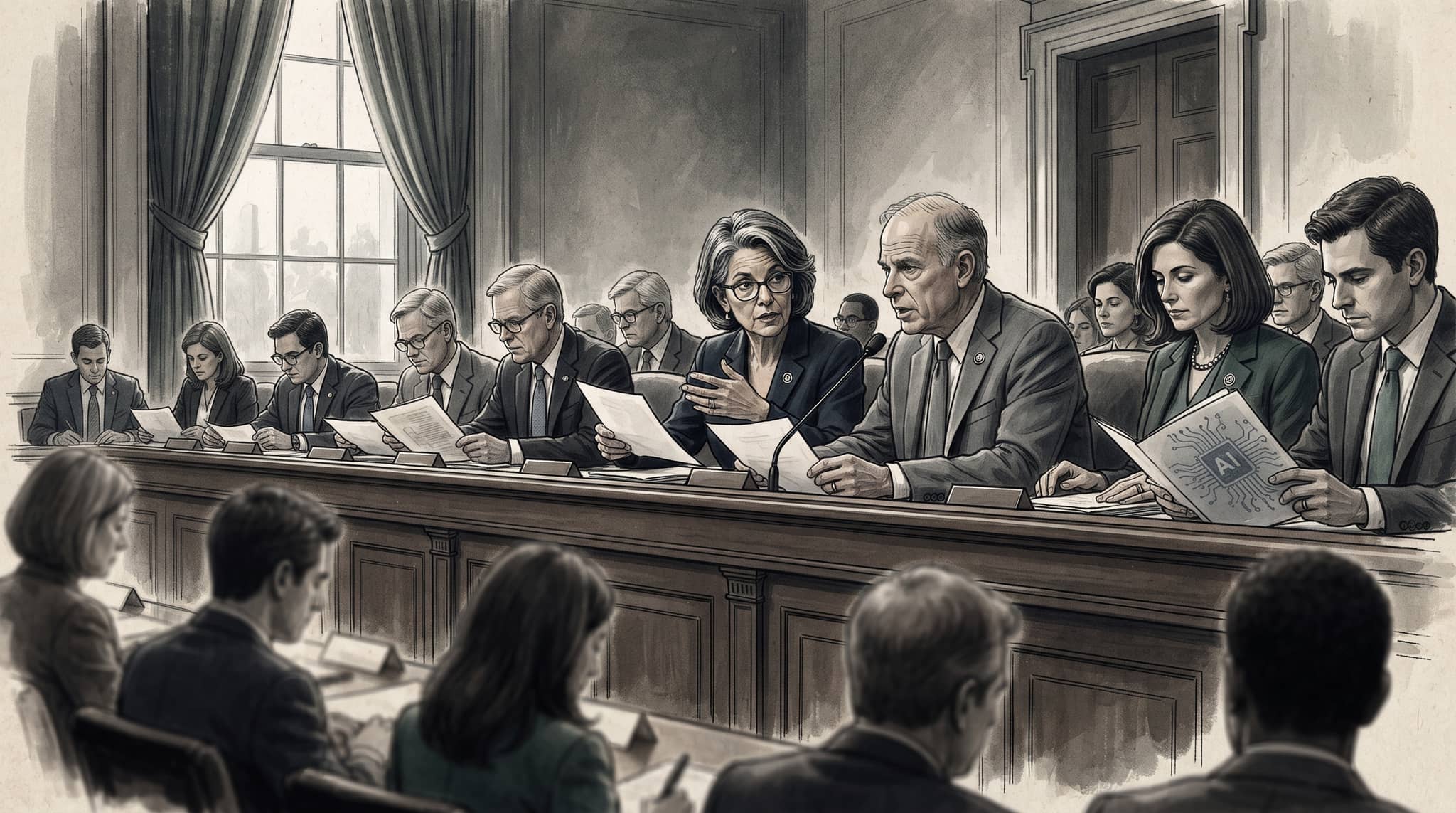
The House Committee on Science, Space, and Technology held a full committee markup on June 25 that favorably reported two narrower bills—the AI Flaw Reporting and Security Enhancement Act (H.R.9333) by a 35-0 vote and the AI Security and Innovation Act (H.R.9363) by a 29-0 vote. Both focus on voluntary reporting and security standards rather than mandatory prohibitions on training, release, or usage that would satisfy the benchmark criteria.
The next catalyst to watch is whether any bill that includes mandatory training restrictions, usage prohibitions, or human-in-the-loop requirements clears a committee markup or reaches a floor vote before the 119th Congress adjourns in December 2026.