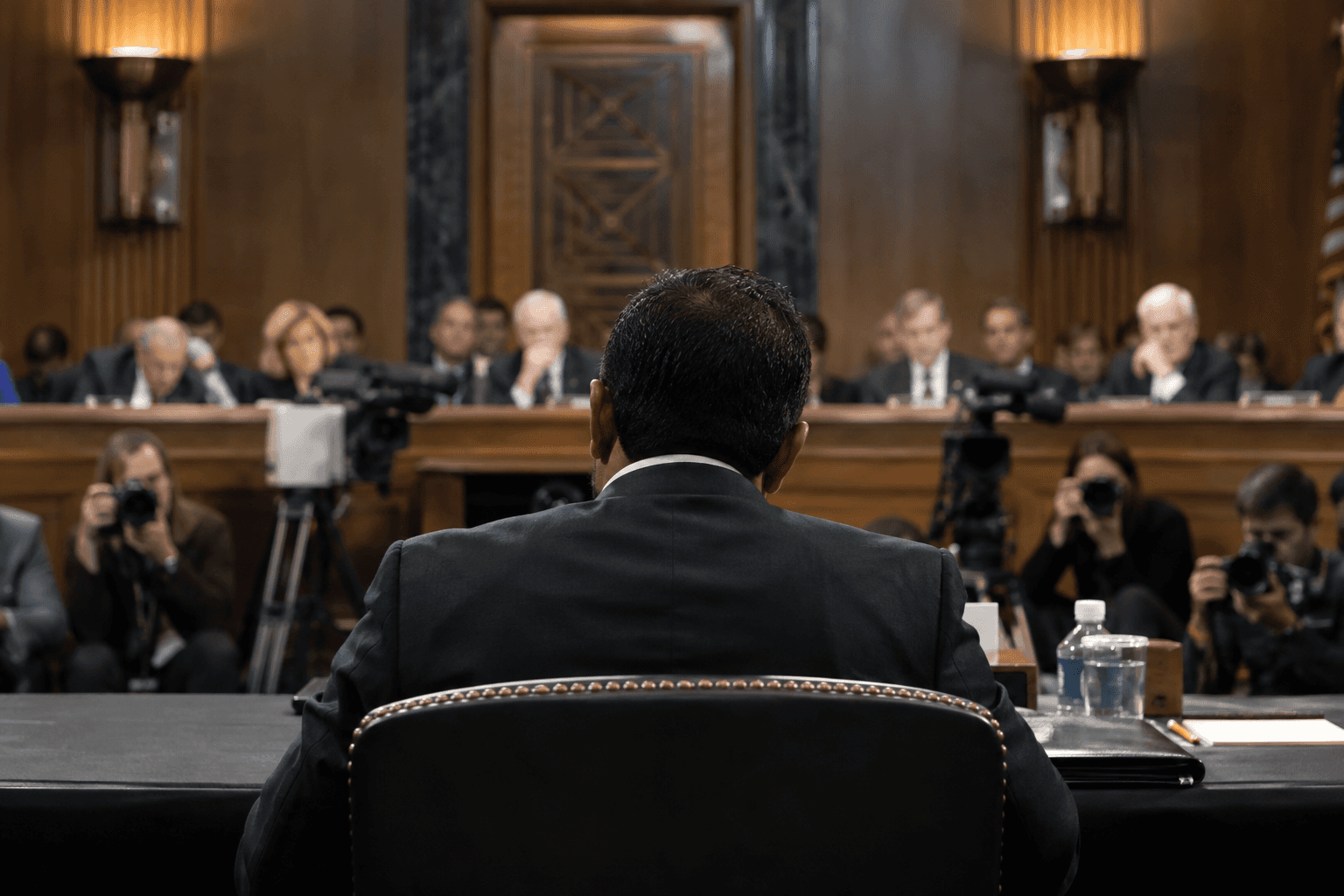
FBI Director Kash Patel emerged from a contentious Senate Judiciary Committee hearing facing renewed questions about the bureau’s hiring rules, personnel decisions and role around the November elections. Patel defended guidance that removed an automatic bar for some applicants with histories involving prostitution or childhood bestiality, saying the change was intended to avoid excluding victims who had been coerced. The exchange became a focal point of Tuesday’s oversight session, but the broader hearing ranged across firings tied to politically sensitive investigations, election-crime preparations and Patel’s management of the nation’s leading federal law-enforcement agency. The tone underscored how quickly routine oversight has become a referendum on the director’s judgment and the bureau’s institutional independence.
Republican Sen. John Kennedy pressed Patel on why the guidance was changed, and the director said his initial reaction was skeptical until staff showed him cases involving victims. Axios reported that Patel denied the revision amounted to lower standards, echoing the bureau’s earlier position that applicants would still face individualized review. Democratic senators used the hearing to challenge Patel over dismissals of experienced agents and investigations touching President Donald Trump’s political opponents. The committee’s public hearing page identifies Patel as the witness and preserves the official record, giving lawmakers a platform to revisit disputes that have accumulated during his tenure. Patel, in turn, argued that his changes were designed to protect victims, improve accountability and remove political bias from the bureau.
Prediction trading showed skepticism that the hearing would produce an immediate leadership change. The Polymarket outcome for Patel to leave the FBI by the end of December stood near 23% Wednesday morning, while a September departure was priced near 2.2%. The broader family had accumulated about $1.72 million in total activity, but only about $12 changed hands over the latest day. Those prices are market-implied odds, not evidence of a personnel decision, and the tiny fresh volume means the hearing produced little measurable repricing. The more defensible reading is that participants continue to see some year-end risk around Patel while assigning a very low chance to an exit in the next two weeks.
The hearing also placed the FBI’s election posture under sharper examination less than two months before voting. Senators asked how the bureau would respond to threats, interference or alleged election crimes, issues that can require federal support without displacing state and local control of polling. Patel’s answers will now be compared with the bureau’s conduct as campaigns intensify and election officials prepare for possible disruptions. At the same time, the director must implement his personnel agenda while retaining expertise in national security, counterintelligence and complex investigations. Any further departures or policy changes will be judged against that operational burden, not only the political criticism aired in the hearing.
The immediate next step is follow-up oversight. Committee members can request documents, written answers and inspector-general review, while the FBI may clarify how the hiring guidance distinguishes victims from voluntary conduct and how election-crime coordinators will operate. Patel is not facing a formal removal process, and the president retains broad authority over the director’s position. Still, the session added a public record that lawmakers, employees and courts may cite in future disputes. Whether it becomes a turning point will depend on what the bureau does next: how transparently it explains contested rules, how it handles election-related cases and whether experienced personnel continue to leave under pressure.