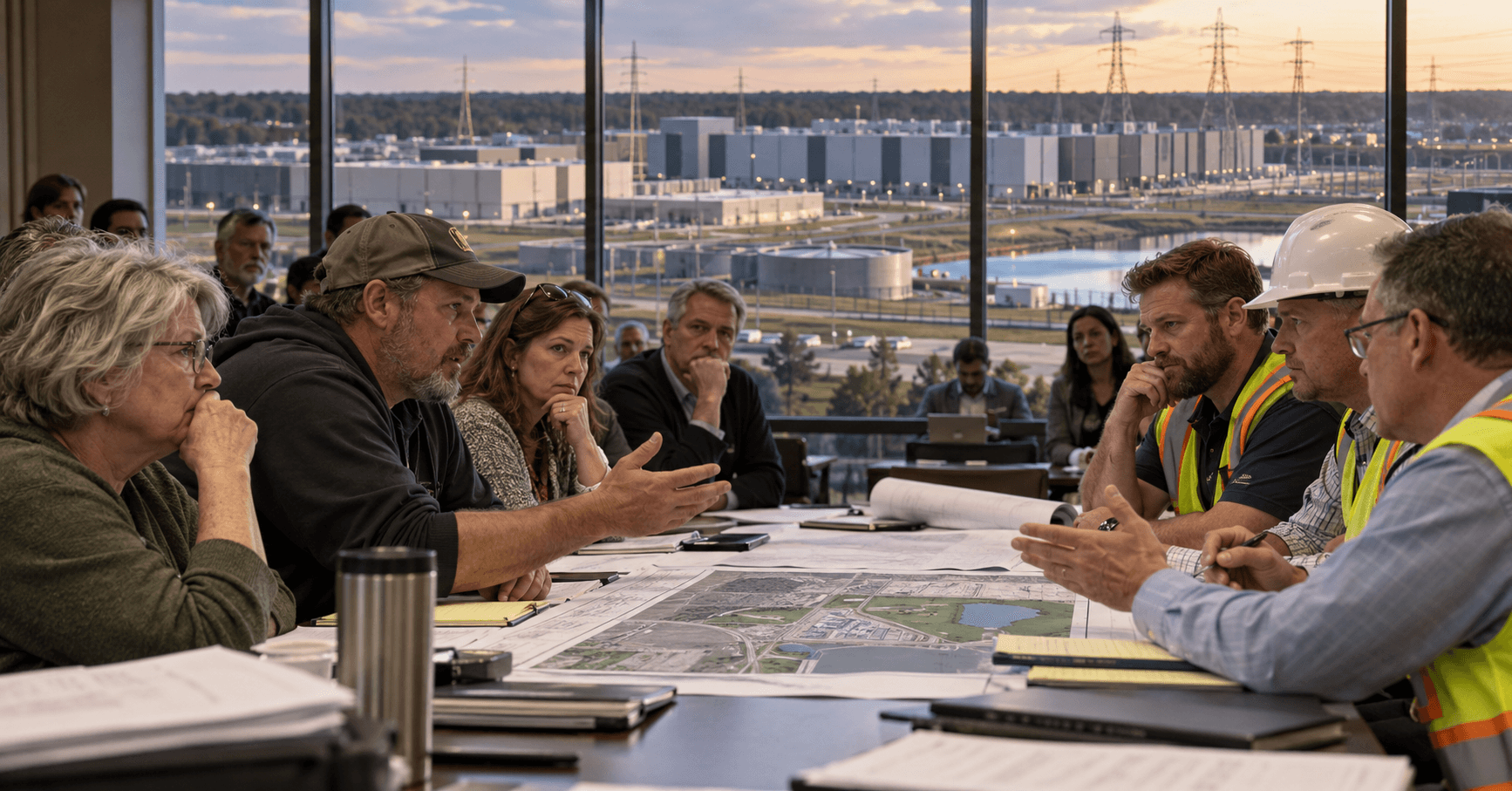
Technology companies, infrastructure investors and construction unions have formed a national coalition aimed at preventing broad bans on data-center construction, with Ohio among the first states in its sights. The American Infrastructure Alliance launched on September 28 with members including OpenAI, Blackstone, CoreWeave, QTS, SoftBank and several building-trades unions. Its stated goal is to develop enforceable state and local guardrails that protect water supplies, limit pressure on electricity costs and ensure host communities share in the economic benefits of new facilities.
The coalition arrives after a wave of local resistance turned data centers into a practical land-use and utility issue rather than a distant technology debate. Cleveland approved a temporary pause on new standalone facilities so officials could study impacts, collect public feedback and design safeguards before processing more projects. That pause is scheduled to run through October 16 and can be extended. Similar disputes across Ohio have focused on how much electricity and water large facilities require, who pays for grid upgrades, what zoning rules should apply and whether promised jobs and tax revenue justify the burden placed on nearby residents.
The new alliance is trying to answer those objections without accepting blanket statewide restrictions. Its membership joins developers and financiers that want a predictable construction pipeline with unions that see large projects as a source of skilled work. An accessible local report on the launch said the group plans to focus on Ohio, Texas, Indiana, Georgia, Iowa, Pennsylvania and South Carolina, where state legislatures and municipal governments are weighing competing demands. The political challenge is that a common national message must still persuade residents who experience each project through local traffic, noise, water use and electricity bills.
Prediction traders remain cautious about a statewide Ohio response. The Polymarket outcome for Ohio enacting a moratorium by the end of 2027 traded near 31.5% in the latest snapshot, down about 21 percentage points over 24 hours. That outcome had drawn roughly $28,100 in total activity, while the wider set of Ohio deadlines had about $112,500. The price estimates whether a statewide action meeting the provider’s rules will occur; it does not count the city and township pauses already in force.
The next phase will unfold in hearings, zoning votes and state legislation rather than in one national announcement. Cleveland must decide whether to replace or extend its temporary pause, while the alliance will have to turn its promise of guardrails into specific commitments on power, water, costs and community benefits. Ohio officials may still prefer targeted rules over a statewide halt. The coalition’s success will depend on whether those rules are credible enough to reassure residents and concrete enough to give developers a stable path to build.