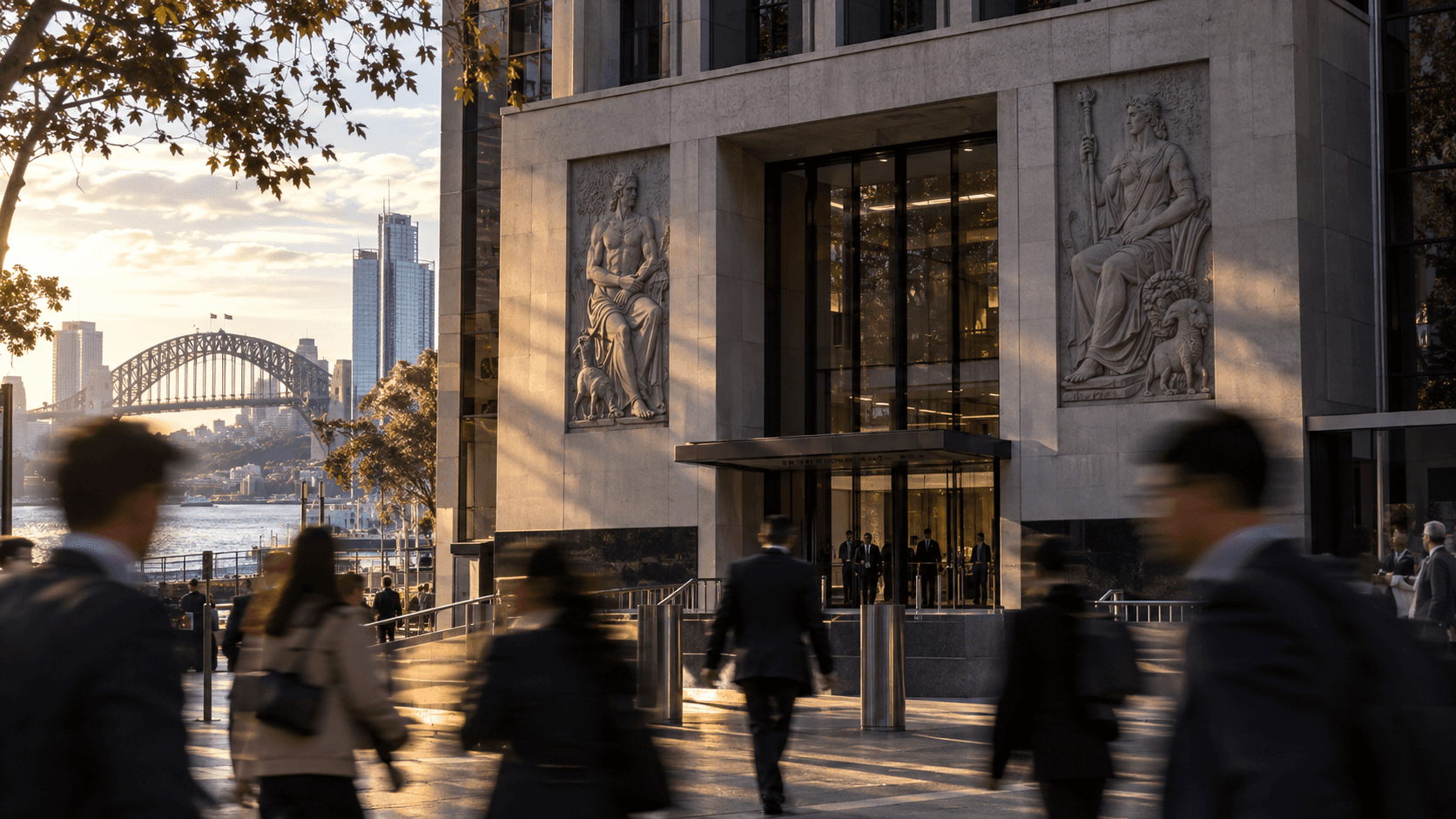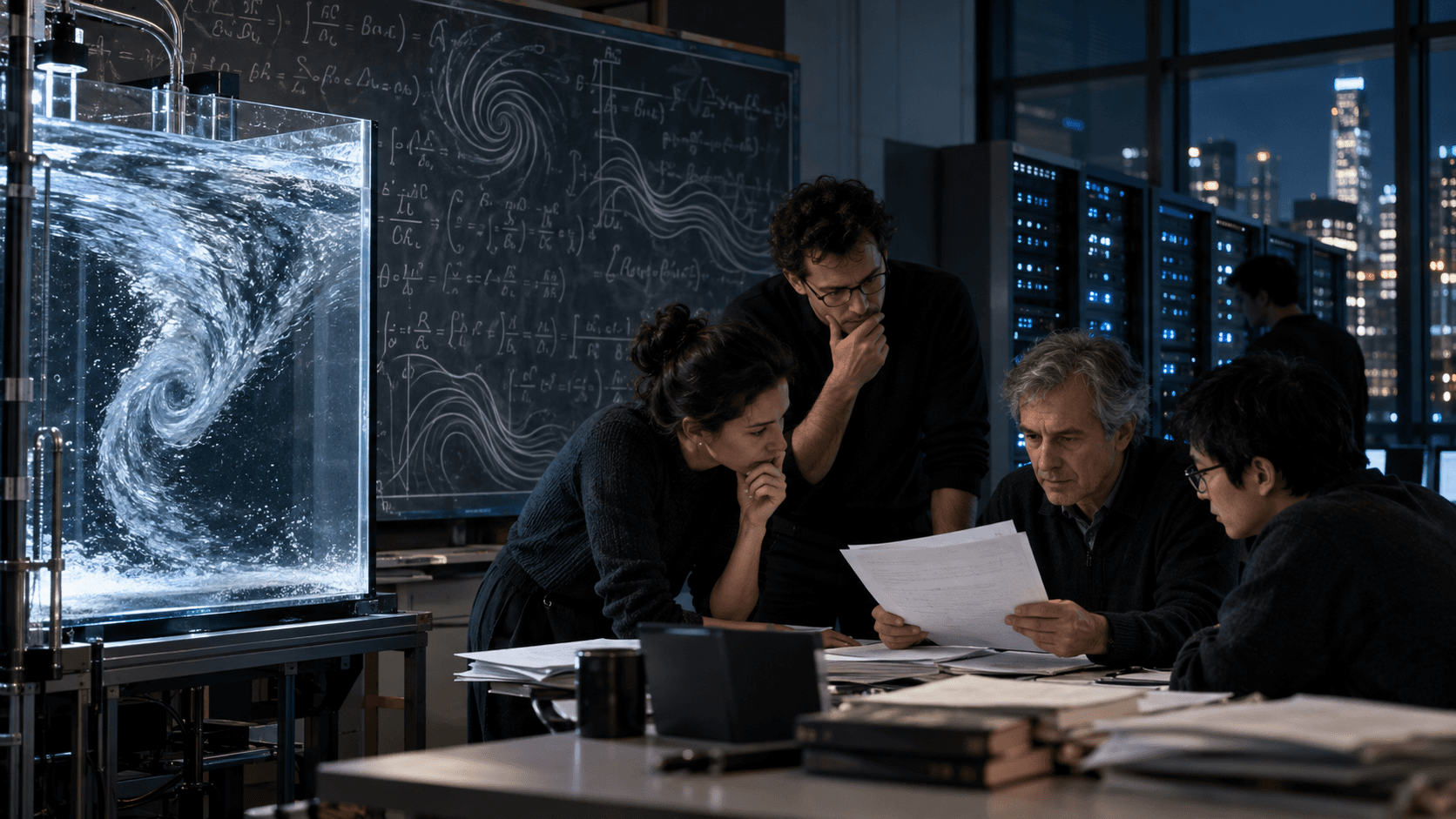
OpenAI says an internal artificial-intelligence system has produced a solution to the Navier-Stokes existence and smoothness problem, a mathematical challenge that has resisted proof for roughly nine decades. The company published a written argument and a formalization in the Lean proof assistant, saying its system found a finite-time singularity in an initially smooth fluid. If the work survives expert review, it would resolve one of the Millennium Prize Problems chosen by the Clay Mathematics Institute. For now, however, it remains a company claim rather than an accepted theorem, and the unusual speed and secrecy of the effort have made verification inseparable from the story of the discovery itself.
OpenAI said roughly 10,000 concurrent agents worked on the Navier-Stokes effort for about 88 hours, generating 2.7 million messages before a further Lean verification stage. The company described the result as the product of an internal model more capable than its publicly released GPT-6 Astra. The proposed proof argues that a smooth fluid flow can develop a singularity in finite time while retaining finite energy, an outcome that would answer the problem through a counterexample. Publishing a machine-checkable formalization gives outside specialists something concrete to test, but it does not substitute for the mathematical community's judgment about whether the construction matches every condition in the official problem.
That judgment is now unfolding alongside a dispute over attribution. Australian Broadcasting Corporation reported that New York University mathematician Tristan Buckmaster and Anthropic researcher Levent Alpoge had been pursuing closely related work on the Euler equations using a similar, highly specialized approach. Buckmaster questioned how OpenAI arrived at that direction after hearing rumors of their progress and raised concerns about whether private work entered the company's process. OpenAI says its system did not look up user data and has described the approaches as distinct. The disagreement does not by itself establish misconduct or invalidate the proof, but it highlights a basic governance problem for AI-assisted science: the provenance of an idea can be difficult to reconstruct when models, private sessions and large agent swarms all contribute.
The announcement rapidly changed expectations around what OpenAI might attempt next. A Polymarket contract put the chance that the company announces another qualifying Millennium Prize solution by the end of 2026 at about 71.5 percent, up roughly 48.5 percentage points in a day. That price is a trader estimate, not scientific validation, and the contract explicitly excludes Navier-Stokes itself. Its movement nevertheless captures the larger shift: one dramatic claim has made another seem much less remote. The immediate next step is slower and more conventional. Independent mathematicians must examine the paper and formal proof, test the assumptions and compare the argument with related work. Whether the claim becomes a historic theorem or a cautionary episode will depend on that review, not on the velocity of the announcement.