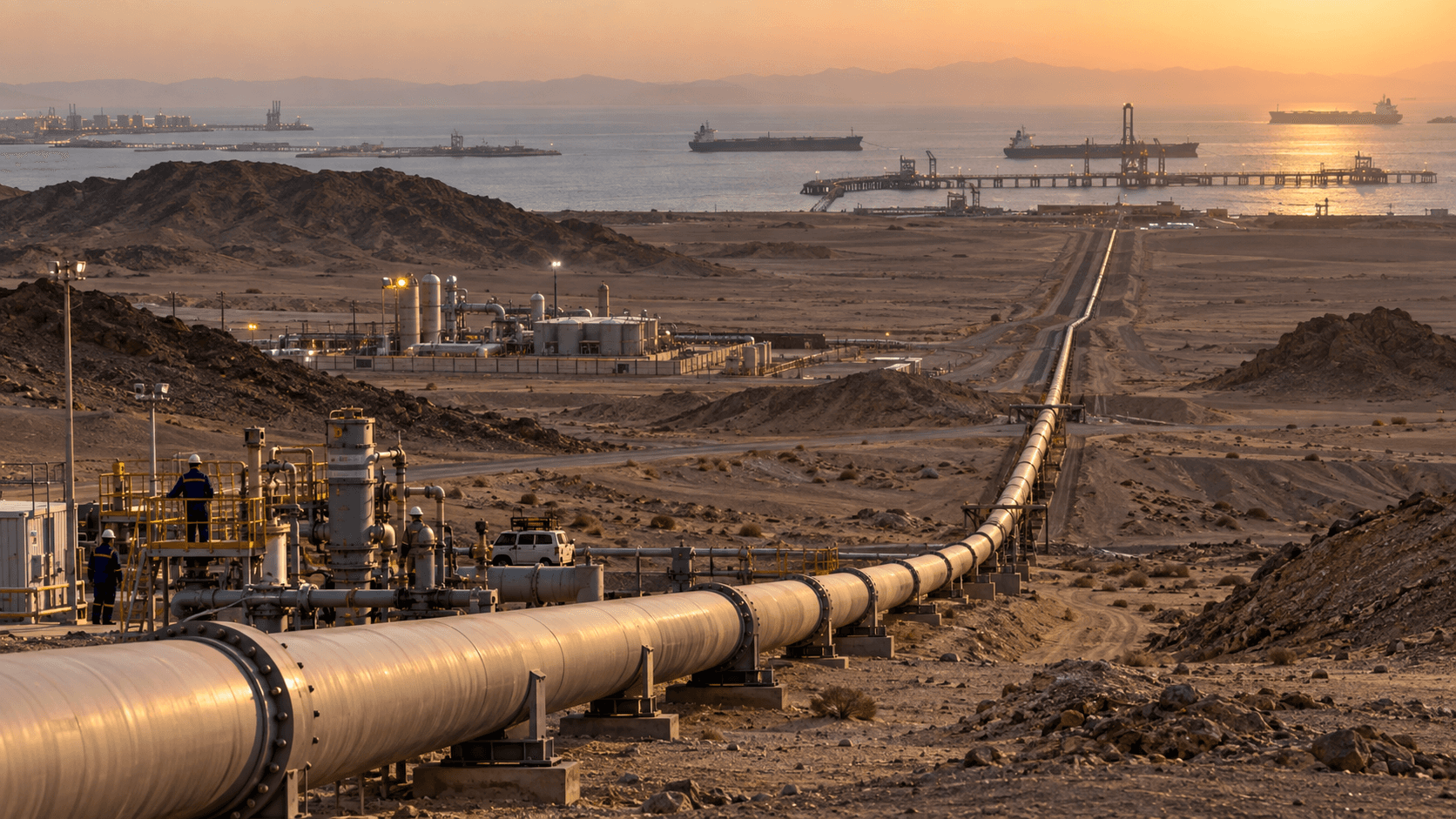
Saudi Arabia has restarted its East-West oil pipeline at a low rate, reopening the kingdom's most important route for moving crude to the Red Sea while traffic through the Strait of Hormuz remains constrained. People familiar with the operations told Reuters that pumping had resumed and exports from Yanbu could restart soon, according to a report carried by Gulf Times. The initial flow is only a first step: repairs and a gradual ramp-up will determine how quickly the line can again carry meaningful volumes across the country. Even a partial return matters because the pipeline gives Saudi Arabia an alternative to loading tankers in the Persian Gulf during a period of acute regional risk.
The restart follows a shutdown caused by attacks on the line in the Riyadh and Medina regions. The Saudi Press Agency said an official Energy Ministry source reported multiple attacks on the morning of September tenth, injuries, and a precautionary halt while technical teams secured the system and checked its integrity. The line runs roughly twelve hundred kilometers from the kingdom's eastern production areas to Yanbu, where crude can move north through the Red Sea and Suez route. Its outage narrowed Saudi export options just as conflict around Iran and Yemen was already complicating tanker movements through both the Gulf and the southern Red Sea.
Restoring service does not instantly restore normal exports. The restart report said the pipeline was operating at a low rate, while earlier assessments warned that repairs to damaged pumping infrastructure could take weeks. Aramco must raise throughput safely, rebuild inventories at Yanbu and coordinate new cargo schedules with refiners and shipowners. That sequencing will decide whether the return of the route meaningfully eases a supply squeeze or merely provides a limited bridge while repairs continue. It also leaves the system exposed to renewed attacks along a long corridor that has become more strategically valuable as other shipping lanes face disruption.
Prediction trading reacted sharply to the operational news. The Polymarket contract on a restart by the end of September rose to about sixty-nine percent in the afternoon snapshot, up roughly thirty-eight percentage points over the prior day, while the broader event had attracted more than one million dollars in total activity. Those prices are market-implied expectations, not confirmation of how much oil is moving or when exports will normalize. The gap between a qualifying restart and commercial-scale flows is especially important here: the contract can respond to evidence that the line is operating even while refiners and tanker operators wait for dependable volumes.
The next evidence will come from cargo nominations, tanker loadings at Yanbu and any official Saudi statement on capacity. A sustained increase in westbound flows would give the kingdom more room to manage disruption near Hormuz and could remove some of the risk premium embedded in crude prices. A slow or interrupted ramp-up would leave global buyers dependent on a fragile recovery and keep pressure on alternative routes. For now, the restart is a real improvement in Saudi Arabia's export position, but the durability and scale of that improvement remain the questions that matter most.