A president’s relationship with the Supreme Court can carry consequences beyond personal friction: the justices rule on disputes involving the administration, and public confidence in the court is at stake. But criticism of justices is not evidence of a private conversation. The reporting available here does not establish whether Donald Trump has met or spoken by phone with any sitting justice, or whether such contact is planned. The distinction matters: public remarks can be examined, while private contact requires separate evidence.
Trump said he regrets nominating three of his first-term Supreme Court picks, criticizing them for rulings against his administration, according to USA TODAY’s report on Oct. 1. The remarks sharpen a question distinct from whether he has publicly criticized the court: has he spoken directly with a justice while that person is sitting on the bench? The article does not answer it. Nor does the contract’s existence supply evidence that a conversation has taken place or is imminent. A market price is a measure of traders’ current belief, not a report of an event.
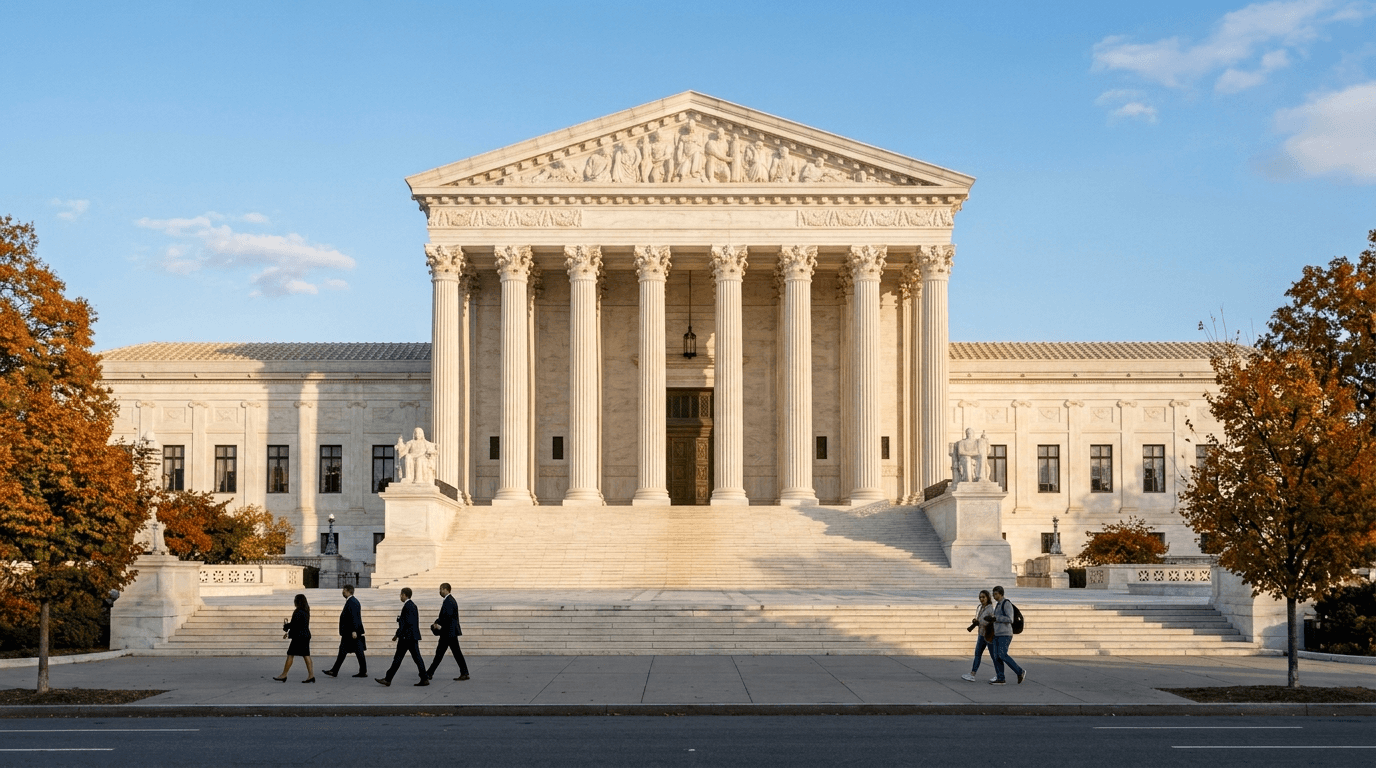
The tension has a concrete judicial backdrop. The court blocked Trump’s plan to use the Postal Service to restrict mail voting in a 7-2 decision, with Justices Neil Gorsuch, Brett Kavanaugh and Amy Coney Barrett joining the majority, the report says. Those are the same justices Trump said he regretted nominating. That sequence makes the dispute relevant to the court’s relationship with the president, but it does not show that the ruling prompted a direct exchange between them. The report supports the connection between the criticism and the justices’ rulings, not a claim about what happened privately afterward.
There is also a counterpoint in Trump’s own account. In the interview, he said he likes loyalty, then said he wanted good decisions for the country, USA TODAY reported. That statement complicates any simple reading of his criticism as a demand for personal allegiance. Public comments, even pointed ones, cannot settle what he expects of individual justices or whether he has communicated with them privately. The reporting offers no record of a meeting or phone call and does not establish that one is planned. Without evidence of direct contact, the public dispute and the private-contact question remain separate.
Kalshi traders currently put the chance of Trump meeting or speaking by phone with a sitting justice before the contract’s cutoff at 61%, as of 1:44 p.m. ET on Oct. 2. The quoted figure is what traders believe, not a verified account of contact or an independent forecast. The market shows no change over the past day or week: it was up 0 points in the last day and up 0 points over the week. Trading activity was 0 contracts traded over the last day, though 947 contracts open remain open. With no contracts traded over the last day, the current figure should be read cautiously; it cannot resolve the underlying question. A market signal, especially without recent trading, is not a substitute for reporting that confirms who spoke with whom. For now, the public evidence establishes friction over the court’s rulings, not whether Trump has spoken directly with a sitting justice.