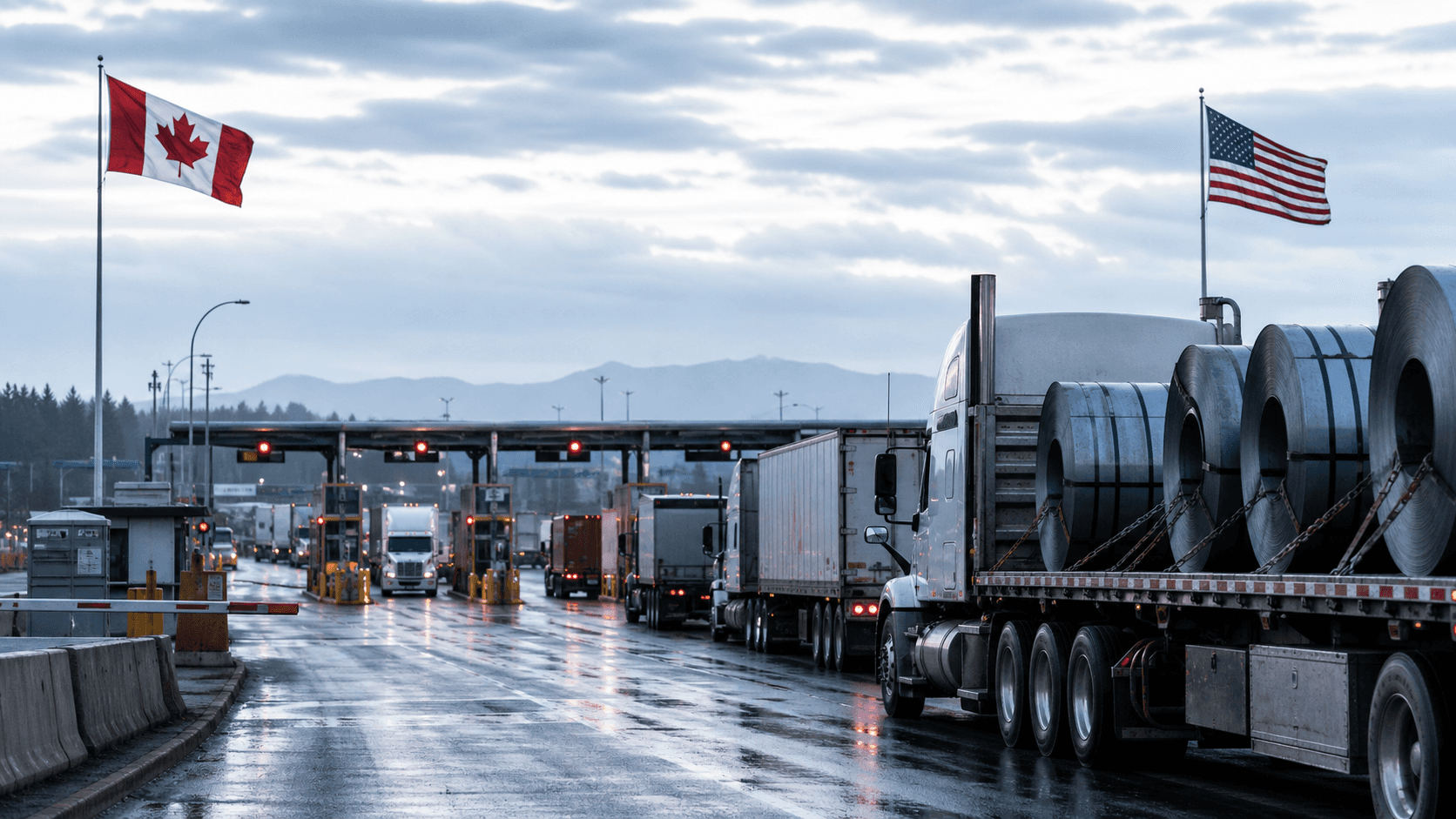
U.S. and Canadian trade negotiations broke down late Friday, sending new 50% U.S. tariffs on roughly $20 billion of Canadian goods into effect early Saturday and leaving Ottawa promising a dollar-for-dollar response.
Prime Minister Mark Carney said Canada suspended the negotiations and ordered its team back to Ottawa after last-minute changes in the U.S. proposal. He described those terms as unfair and uneconomic and said they raised doubts about whether any agreement could be relied upon. Canada plans matching tariffs, although the detailed retaliation list had not yet been released.
Washington gave a different account. U.S. Trade Representative Jamieson Greer said Canada declined to finalize terms the two sides had discussed earlier in the week. The Associated Press reported that no further talks were scheduled after the breakdown.
The rupture reverses the cautious optimism of just a few days ago. On August 18, Canada said substantial progress had persuaded the United States to postpone the Section 338 duties through August 21. That short reprieve expired without a deal. The White House proclamations cover selected Canadian goods, including products tied to alcohol, autos and dairy, while exempting categories such as energy, potash and goods already subject to certain Section 232 tariffs.
What the market is pricing
Polymarket traders now assign only a 12% probability to a qualifying U.S.-Canada agreement by August 31, with No priced at 88%. The newly launched contract had about $10,843 in cumulative trading volume and roughly $19,720 in liquidity at the latest snapshot, so the price is a useful real-time signal but still comes from a relatively small market.
The contract has a stricter test than simply restarting negotiations. It resolves Yes only if both governments announce acceptance of the same diplomatic agreement by August 31 at 11:59 p.m. ET and that agreement lowers, revokes or suspends U.S. tariffs on Canada. Statements about progress, prospective terms or separate unilateral policies do not qualify.
That distinction matters now. Carney has publicly suspended talks, the tariffs are already in force and both sides are blaming the other for the failure. A fresh meeting or another deadline extension could improve the political atmosphere without satisfying the market's resolution rules.
Why 12% is not zero
The legal machinery still leaves room for a reversal. The Section 338 proclamation says the president may suspend, revoke, supplement or amend the tariff action when the public interest requires it. The three-day postponement earlier this week also showed that the implementation calendar can move quickly when negotiators believe a deal is close.