Alibaba has entered the final week of August looking less like one contender in China's crowded artificial intelligence race and more like the company everyone else is still trying to catch. The benchmark at the center of that contest, the Arena text leaderboard used across the industry as a rough public measure of model quality, has become a late-summer proving ground for Chinese labs trying to show they can keep pace with the fastest global releases. In that setting, Alibaba's recent Qwen updates have shifted the story from a broad contest among several ambitious labs to a narrower question of whether anyone can produce a last-minute leap big enough to unsettle a leader that has spent the month stacking product momentum on top of infrastructure scale.
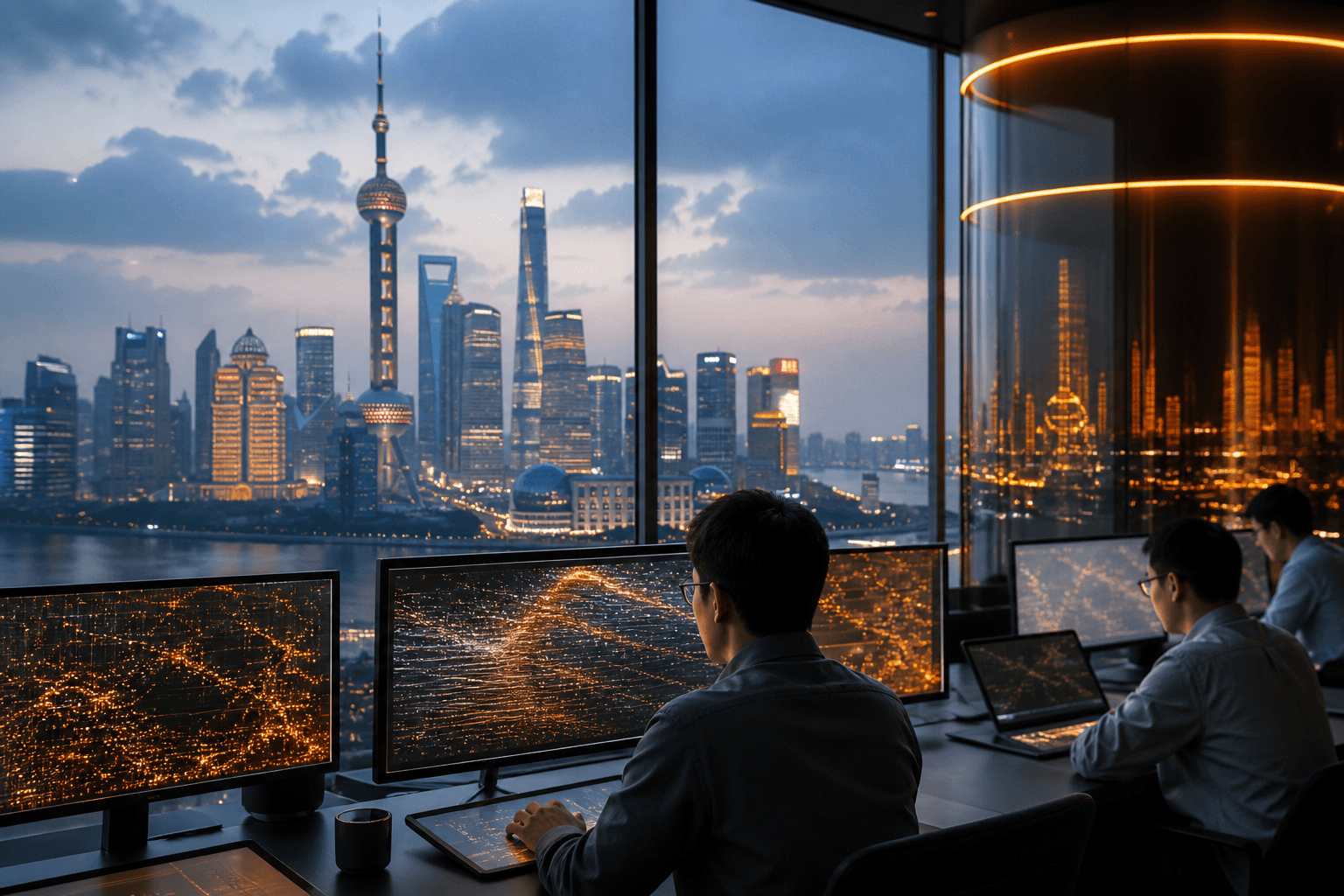
The strongest case for Alibaba is not just that one model looks good on one chart. It is that the company has paired a fresh flagship release with a much larger corporate bet on the cloud, chips and computing capacity needed to keep improving quickly. Qwen's team used the start of August to introduce Qwen three point eight Max as its most capable model yet, presenting it as a major step forward in coding, agentic work and multimodal performance. Days later, Alibaba's quarterly results showed how much money the company is willing to burn to support that push, with profit falling sharply as spending on artificial intelligence infrastructure surged and cloud revenue tied to AI workloads climbed. That combination matters because the leaderboard race is not only about clever demos. It is also about who can afford to keep training, serving and iterating frontier systems at scale when every improvement demands more capital and faster deployment.
Rivals still have arguments of their own, which is why the market has not written the rest of the field entirely out of the script. Z.ai has spent August promoting GLM five point three as a stronger coding model with better cyber performance, while its developer updates and outside coverage have tried to show that Chinese challengers can still produce abrupt jumps late in a cycle. Moonshot, DeepSeek and other domestic labs remain part of the broader conversation because the Chinese AI field has repeatedly compressed apparent gaps faster than outsiders expected. But the burden has shifted. Instead of asking whether Alibaba belongs in the top tier, the question now is whether a rival can post enough visible improvement in the final days before the August check to force a reordering that looks credible beyond one burst of launch-week enthusiasm.
Prediction traders have ended up mirroring that imbalance more than questioning it. On Polymarket's August contract for the best Chinese AI company, Alibaba was trading around ninety four percent on Tuesday afternoon, with Z.ai a distant second and the rest of the field reduced to long-shot status. That does not decide anything by itself, and it certainly does not substitute for the leaderboard that will settle the contest. What it does show is how quickly confidence has hardened around a single name after a month of releases, spending signals and public benchmark scrutiny. If nothing material changes before the final Arena snapshot, Alibaba looks positioned to leave August with more than a temporary bragging right. It would leave with another piece of evidence that China's AI race is still fiercely competitive, but increasingly shaped by the companies that can combine model quality with the balance sheet to keep pressing their advantage.