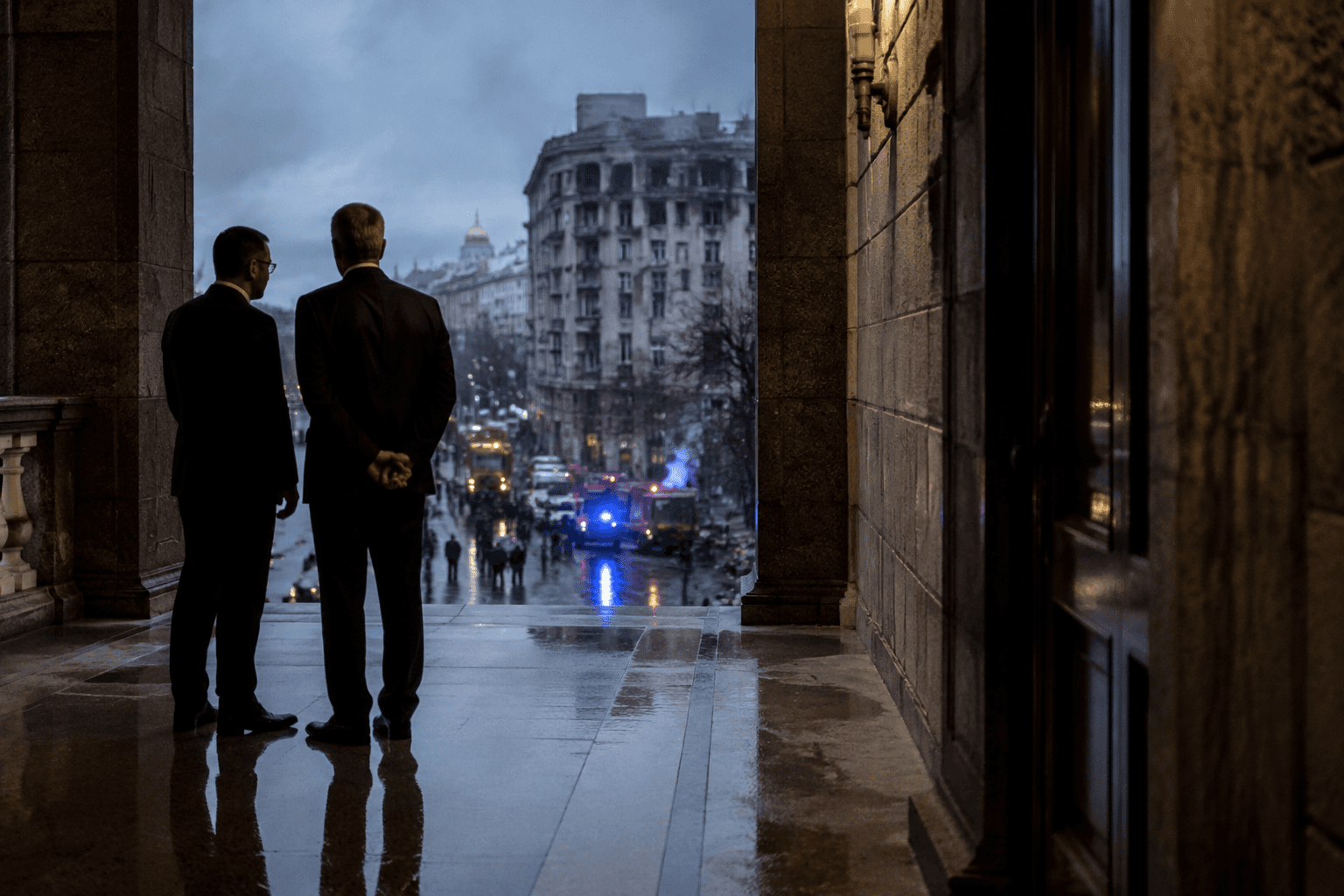
The war in Ukraine entered Friday with two realities moving in opposite directions. Overnight attacks killed at least three people, according to Associated Press, underscoring how little has changed on the battlefield for civilians living under regular strikes. At the same time, President Volodymyr Zelenskyy said American envoys were expected in Kyiv within days as part of a renewed diplomatic push, while separate reporting captured Vladimir Putin signaling that some path to a settlement still exists. That combination does not amount to a breakthrough. It does, however, mark a return of real diplomatic choreography after months in which talks appeared stalled and other crises crowded Ukraine down the list of immediate international priorities.
The gap between diplomatic language and military reality is what makes this moment unusually difficult to read. A visit by envoys to both capitals can restart a process, but it does not solve the hard questions that have frozen previous negotiations: territory, security guarantees, monitoring, sequencing, and the political cost each side would bear by accepting less than it has publicly demanded. Even the warmer language from Moscow and Kyiv comes wrapped in caveats. Putin has framed outside support as useful but secondary to direct agreement by the parties, while Zelenskyy continues to speak from a country absorbing daily attacks and carrying deep distrust of any arrangement that looks temporary, reversible, or weakly enforced. The diplomacy is real, but so is the distance between exploratory talks and an enforceable ceasefire.
Prediction markets reflected that ambiguity rather than declaring a near term end to the war. Polymarket kept the ceasefire ladder near the top of its visible non sports cards on Friday morning, and the curve showed only modest improvement in the shorter dated outcomes. The contract for a ceasefire by the end of December sat below one chance in five, while the spring and early summer dates in the following year carried meaningfully higher odds. Trading activity was still heavy, with more than fifty thousand dollars in event volume over the previous day and more than half a million dollars in open interest across the board. That pattern suggests traders took the envoy schedule seriously, but still viewed an actual ceasefire announcement in the next few months as difficult to justify.
What happens next depends on whether these visits produce a process that can survive first contact with the core disputes. A framework for future talks, a timetable for technical meetings, or agreement on monitoring principles would all count as progress without yet changing the war itself. A true ceasefire would require something much harder: a mutual willingness to suspend fighting under terms both governments can defend at home and on the front. Friday's diplomatic opening matters because it restores movement to a file that had looked stuck. It does not matter because peace is suddenly close. The story is that a negotiation channel is alive again, just as the violence on the ground keeps reminding everyone how much still separates contact from settlement.