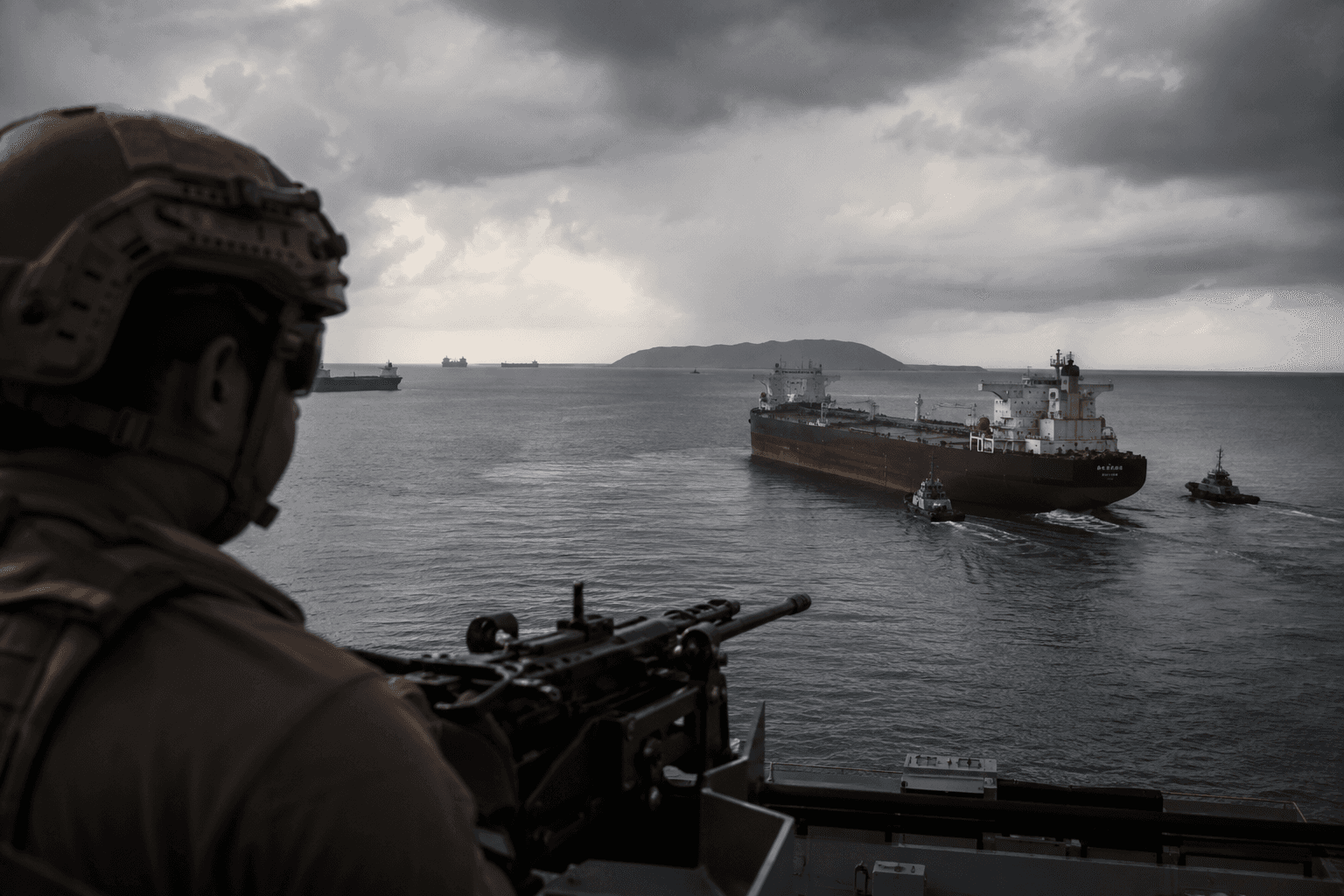
The White House is still speaking as if the Hormuz blockade is a tool to be defended, not a policy that is close to ending. That was the central message surrounding Vice President JD Vance's latest public remarks as the U.S.-Iran conflict moved deeper into its sixth month. Associated Press reported on Friday that Vance rejected the idea of calling the confrontation a war and offered no sign that Washington was preparing to lift the naval squeeze that has become one of the administration's main pressure points against Tehran. That matters because the blockade is now doing more than signaling military resolve. It is shaping shipping patterns, energy prices and the political cost of a conflict President Donald Trump still wants to contain without looking weak.
Official messaging from the administration reinforces that harder line. In a White House release late last month, Trump argued that the United States effectively controls the Strait of Hormuz and portrayed the blockade as a strategic success rather than a temporary bargaining chip. The administration's public posture has therefore become unusually clear on one point: if there is a path to de-escalation, it has not yet been announced through the channels this market would recognize. That keeps the policy debate in a narrow lane. Washington can ratchet pressure, change the mix of sanctions and military moves, or talk about stability, but none of that amounts to a formal suspension of the blockade. Until an official statement says otherwise, the default assumption is that the shipping clamp remains intact even if diplomacy continues somewhere out of public view.
Traders have adjusted by pushing their confidence further out on the calendar. Polymarket kept the blockade-end event near the top of its non-sports list on Friday, but the term structure showed a distinct split between eventual and immediate expectations. The contract for an announcement by mid September traded around five cents, the late September line sat near eighteen cents, and the October line around thirty five cents. By year end, however, the same board still implied about a fifty nine percent chance that Washington ultimately makes some formal move to suspend or terminate the blockade. The event drew roughly three hundred forty four thousand dollars in twenty four hour volume with more than two and a half million dollars in open interest, so this is not a sleepy corner of the market. It is an active repricing of timing. Traders still believe an exit is possible, but Friday's public rhetoric made it harder to argue that one is close.
The next real test is not whether officials sound slightly calmer for a day. It is whether the White House, Pentagon or State Department shifts from pressure language to decision language. That is a high bar, and for now the administration does not appear interested in clearing it. As long as Washington insists the blockade is working and Vance avoids describing the conflict as something that demands a near term settlement, the burden stays on any future announcement to break clearly with the present stance. Until that happens, the market can keep debating when an end might come. The policy itself still looks firmly in force.