France's presidential campaign is no longer a distant shadow election. It is starting to look like the main organizing force in the country's politics, even with the vote still months away. Associated Press reported this week that the race to replace Emmanuel Macron accelerated as the summer break ended and parties returned to a landscape defined by fragmentation, fatigue and the absence of an incumbent who can run again. That vacuum has given Marine Le Pen her strongest opening yet to convert years of near misses into a first place finish, but it has also drawn a crowded cast of rivals who all believe the campaign remains fluid enough for a late surge. The result is a contest that feels open in structure even if it currently has a clear market leader.
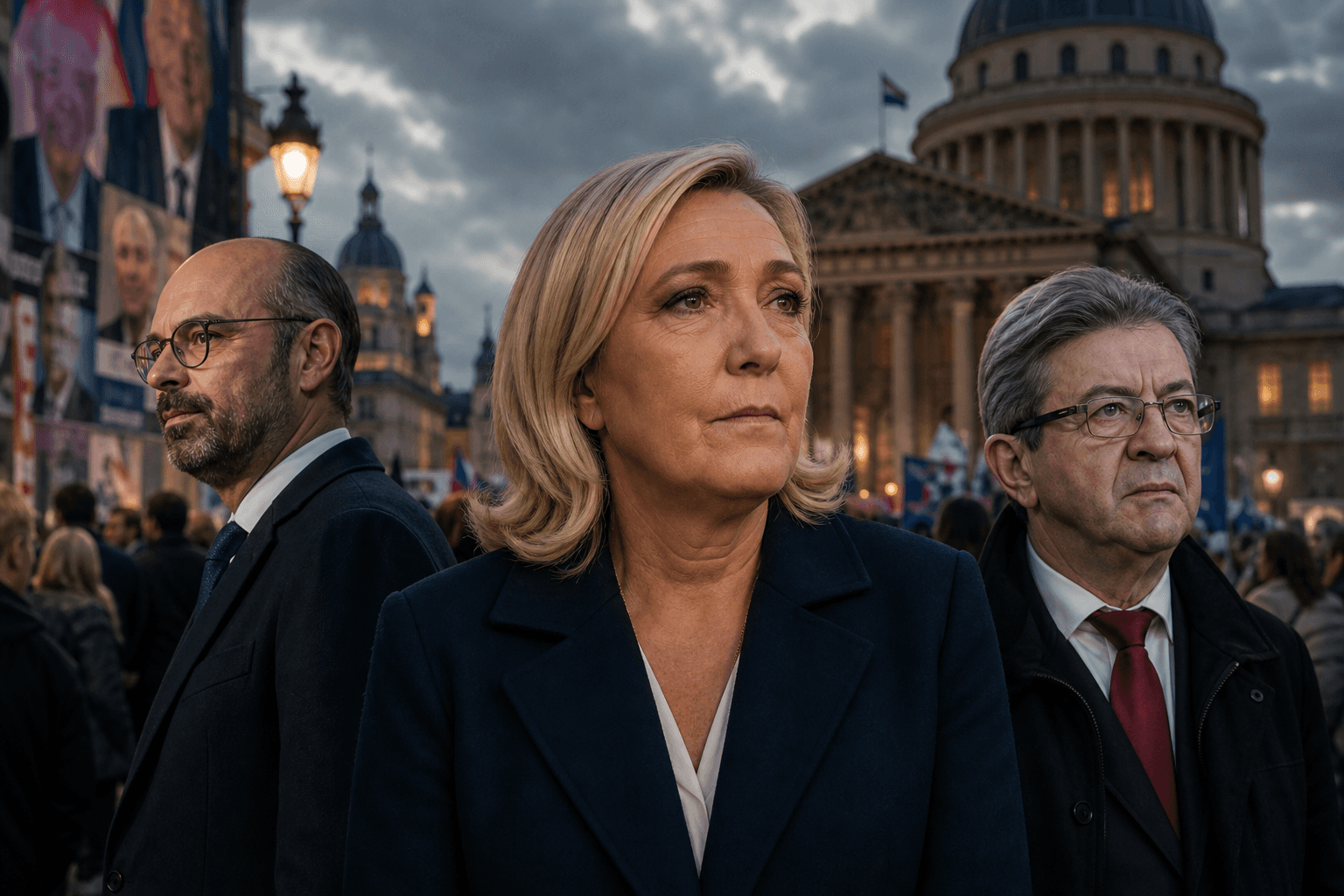
The instability comes from almost every part of the field at once. Le Pen still commands the broadest and most disciplined bloc, yet she is not facing a single obvious establishment challenger. Former Prime Minister Edouard Philippe is trying to consolidate the moderate center and center right without looking like a mere extension of Macronism. Gabriel Attal still appeals to younger pro government voters but must prove he can rise above the outgoing president's exhaustion effect. On the left, Jean-Luc Melenchon keeps a loyal following while other figures, including Raphael Glucksmann, try to build an alternative around coalition politics rather than personal dominance. Le Monde's late August coverage of the first debate and the wider succession fight underscored the same structural problem for the mainstream parties: they know division could hand the runoff to the strongest populist candidates, but they still do not have a credible mechanism for unifying early around one standard bearer.
That is why the market has settled on a hierarchy without reaching a conclusion. Polymarket's French election board handled nearly nine hundred forty one thousand dollars of volume in the past day and about three point one million dollars over the past week, with open interest sitting just above one million dollars. Marine Le Pen traded around thirty five percent on Friday, making her the clear favorite but not an overwhelming one. Edouard Philippe sat near twenty seven percent after gaining over the past week, while Jean-Luc Melenchon was around thirteen percent and several other contenders remained alive enough to complicate the route to the runoff. Those odds imply that traders see a real Le Pen advantage, but they also see the other qualifying slot as unsettled and highly sensitive to alliances, withdrawals and debate performance. In other words, the board is rewarding clarity where it exists and punishing everyone else for operating in a still splintered lane.
Autumn will now matter more than the summer reset. Party leaders have to decide whether they are running campaigns of conviction, leverage or eventual merger. If moderates keep waiting for someone else to blink, they may discover too late that the race has already hardened around stronger anti system poles. If the left cannot narrow its argument, it risks producing energy without enough scale. And if Le Pen keeps benefiting from everybody else's indecision, the campaign will increasingly become a referendum on whether France wants rupture more than reassurance. The field remains crowded, but the political cost of staying crowded is getting easier to see.