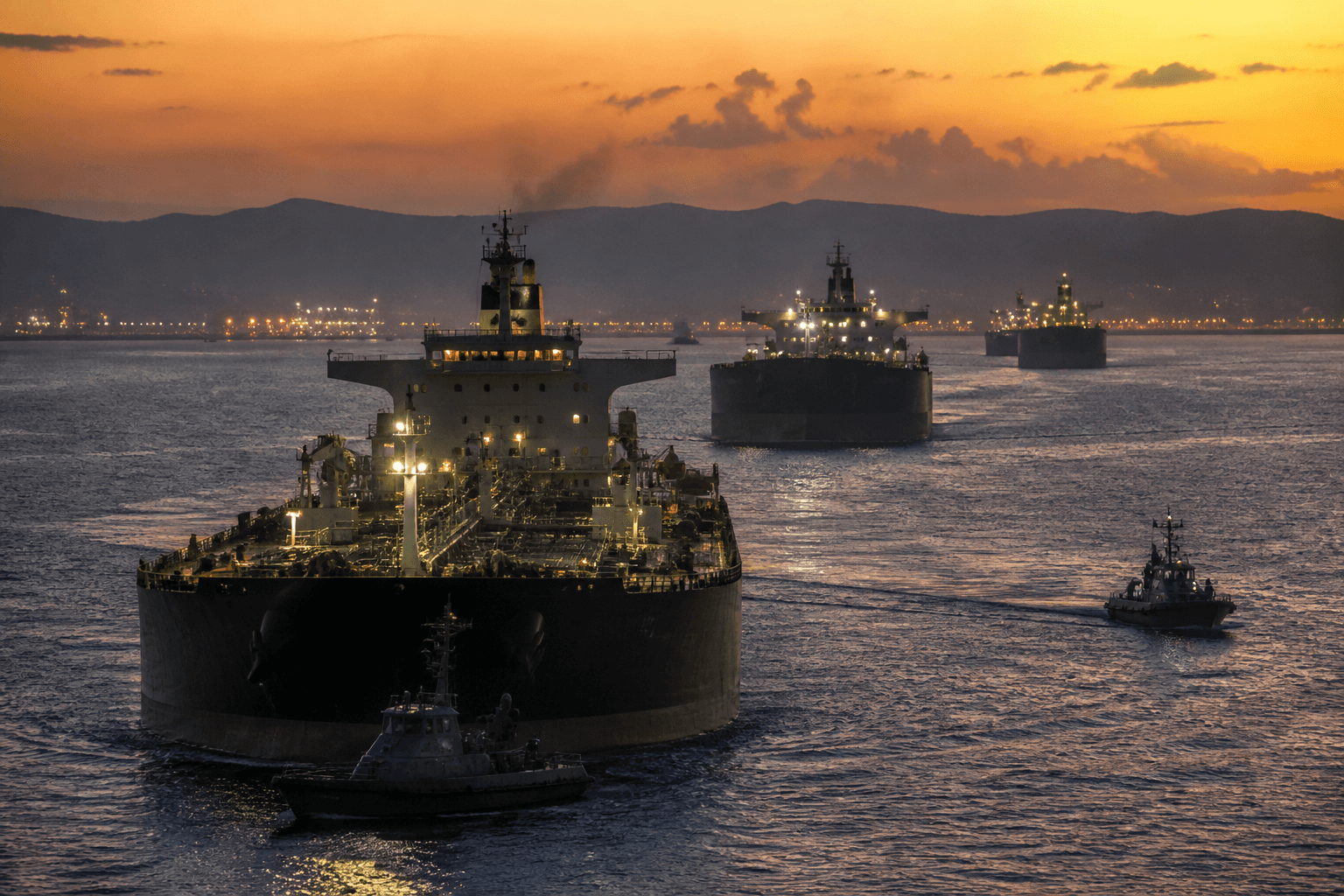
The contest over the Strait of Hormuz has moved into a more delicate phase than the blunt military brinkmanship that defined much of the summer. Iran and Oman are still working on the outline of a shipping arrangement that could gradually ease traffic through one of the world's most important waterways, while regional governments search for a political off-ramp from a war that has already rewritten energy and security calculations across the Gulf. But the central obstacle has not disappeared: Washington's blockade campaign and sanctions pressure are still being used as leverage, and Tehran continues to insist that any durable normalization must come with meaningful relief rather than a temporary navigational fix. That leaves the story poised between diplomacy and coercion, with enough movement to keep hopes alive but not enough trust to call a breakthrough.
Recent reporting has kept that tension in plain view. Associated Press reported earlier this week that Iranian and Omani officials were discussing a temporary corridor and mine-clearing arrangements to manage maritime traffic, an indication that technical progress is possible even while broader political disagreements remain unresolved. A second AP dispatch two days later described regional governments still pressing for an off-ramp, underscoring that the search for safer navigation is now part of a larger attempt to prevent the Iran conflict from hardening into a permanent state of economic siege. Al Jazeera's earlier reporting on the same negotiations showed why the process remains fragile: any workable arrangement has to satisfy different objectives at once, including Iran's desire for sanctions relief, Oman's need for a stable shipping regime and Washington's aim of preserving pressure on Tehran. Those goals overlap just enough to keep talks alive, but not enough to make a formal settlement easy.
Prediction markets have moved toward a slower, later resolution rather than an imminent one. On Polymarket's visible featured board, the longest-dated outcome for a U.S. announcement ending the Iranian blockade remained the market leader on Saturday, while shorter windows carried materially lower odds after a fresh daily pullback. That pattern suggests traders still see some path to a political announcement before year-end, but they are backing away from the idea that it will come quickly. The market is capturing a world in which maritime talks can advance without producing an immediate White House declaration, and in which incremental de-escalation is more believable than a sudden grand bargain.
What happens next depends on whether the parties can convert technical coordination into political concessions. If shipping lanes become more reliable and regional mediators keep both sides talking, pressure could build for a narrower deal that reduces risk without ending the confrontation outright. If sanctions tighten further or either side treats the corridor talks as a tactical feint, the current optimism will fade just as quickly as it appeared. For now, the important point is that the Hormuz story has changed from a question of pure disruption into a question of what kind of incomplete peace the region might tolerate. That is why the path to ending the blockade feels more plausible than it did a few weeks ago, but still far from settled.