Former Vice President Kamala Harris told Rev. Al Sharpton at the National Action Network convention in New York City in April 2026 that she was 'thinking about' running for president again in 2028. She repeated the phrase three times. That is not a throwaway line from a politician who has disappeared. It is the most direct public signal yet from someone who has been laying groundwork in full view: KDH for the People Inc., a nonprofit that can accept unlimited, undisclosed donations; a separate nonprofit track for a women's empowerment initiative if she does not run; and a summer of fundraisers for Democratic state parties in Nevada, Michigan, North Carolina, South Carolina, Arkansas, Georgia, and Louisiana, capped with a keynote speech at the Louisiana Democratic Party's annual gala in August.
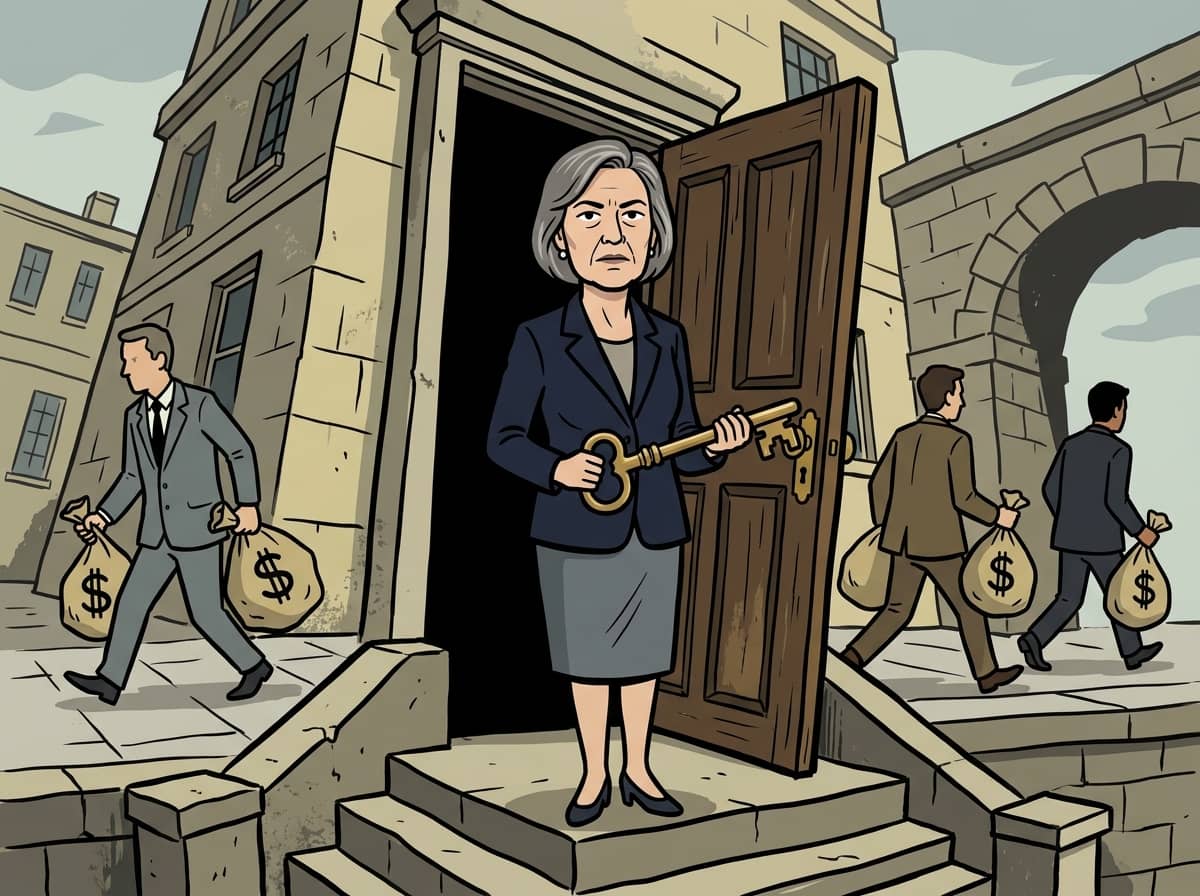
The donor class is unimpressed. Multiple major Democratic donors and fundraisers told ABC News and New York Magazine that they were reluctant. One influential California donor said he had not heard a single person suggest a Harris run would be good for anything. A top New York donor flatly stated the party just wants someone who can win back the White House and does not see that happening with her. The $1 billion her 2024 campaign burned through in 15 weeks after Joe Biden withdrew hangs in the air. Early primary polls give Harris a double-digit lead over California Governor Gavin Newsom, former Transportation Secretary Pete Buttigieg, and Representative Alexandria Ocasio-Cortez, but her support rarely tops 30 percent despite universal name recognition. The ceiling is real and well-documented.
At publication, the Kalshi prediction market on "Will Kamala Harris be the Democratic Presidential nominee in 2028?" priced her chance at 8.25 percent, down from 8.85 percent over the past 24 hours, with $55,064.42 in trading volume. The decline mirrors the dominant narrative: donor skepticism, a soft polling cap, the memory of an expensive loss. The market is pricing the story being told about her.
Maybe the market is pricing too much story and not enough mechanics. Harris has infrastructure. She has a nonprofit structure that gives her operational flexibility. She is studying artificial intelligence, consulting with industry figures, and strategizing with civil rights leaders Stacey Abrams and Sherrilyn Ifill on proposals to counteract the Supreme Court's Callais decision on the Voting Rights Act. That looks like a candidate developing a platform, not one fading away. The donor class may be cool, but the Democratic primary is a long game. A 30 percent polling ceiling in early 2026 tells us more about polarization and name recall than about the eventual outcome. Primary frontrunners often remain frontrunners until a rival consolidates the alternative. No one has done that yet.
The market resolves on November 7, 2028. That is more than two years away. If Harris continues to build policy credentials, if no alternative breaks out, and if the donor class gradually returns as the race becomes competitive, the 8.25 percent will look cheap. The contrarian miss here is treating donor sentiment as the final selectorate. In a primary, it is the voters—and they still know her name. What would change this thesis? A clear signal from Harris that she is not running, or the emergence of a well-funded alternative who can break the polling ceiling. Until then, 8.25 percent looks too low.