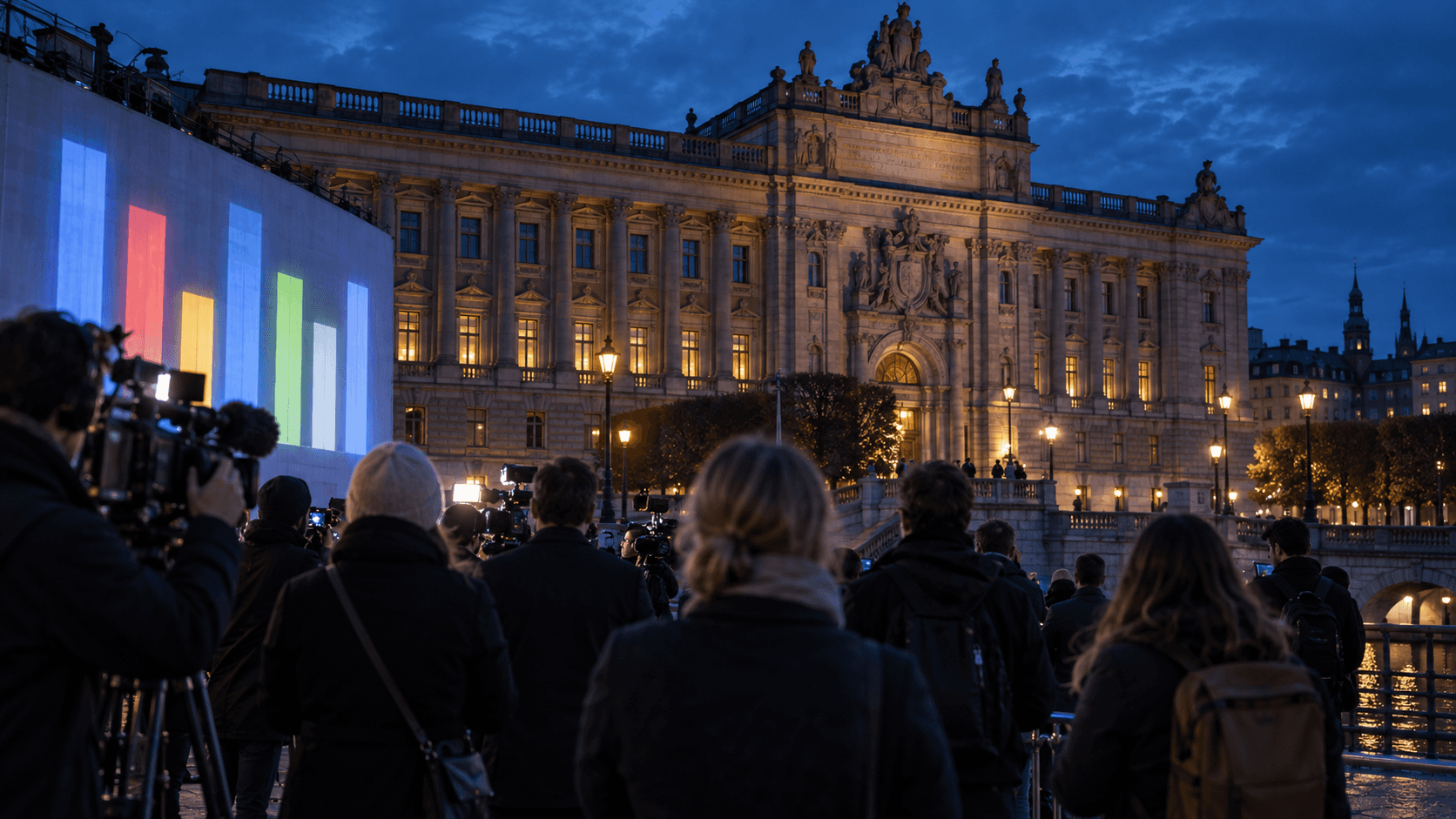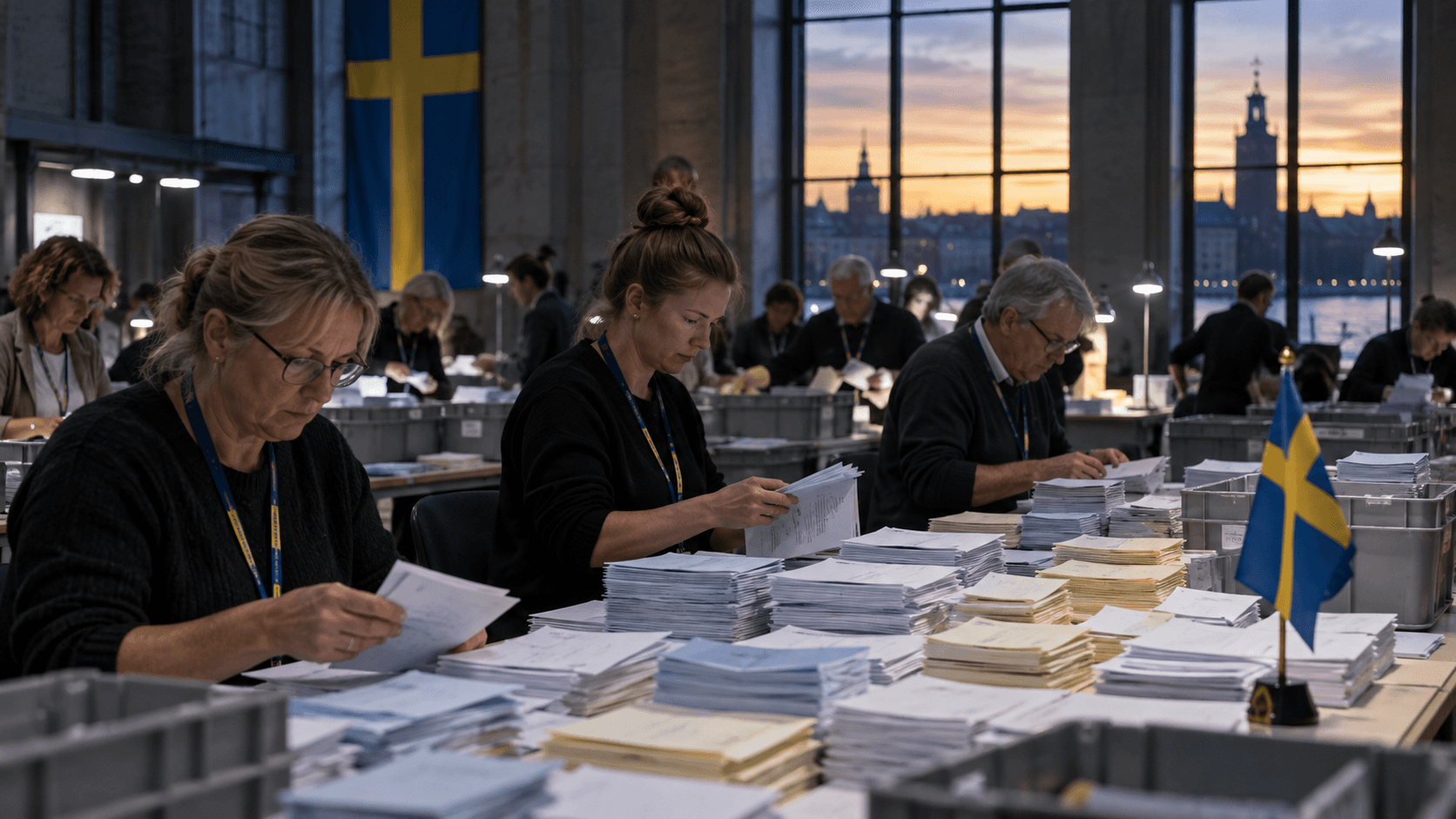
Sweden’s center-left opposition moved into pole position after Sunday’s national election, but the country still faces a tense wait before the balance of power is settled. A preliminary count cited by Reuters put the opposition bloc on 176 seats and the outgoing center-right government on 173, with the two sides separated by roughly four-tenths of a percentage point in the popular vote. Results from 353 voting districts and ballots cast abroad remained outstanding early Monday. Sweden’s Election Authority says preliminary and final counting continues after election day, with the final result expected only after the remaining ballots have been checked. That leaves Social Democratic leader Magdalena Andersson ahead, but not yet ready to claim an uncomplicated mandate.
The arithmetic points toward a change of government while also advertising how difficult the next phase could be. Andersson’s Social Democrats would need support from several parties with sharply different positions on taxes, climate, migration and rural policy. The Left Party and the Greens are natural partners on many questions, while the Centre Party has resisted giving the Left formal influence. On the other side, Prime Minister Ulf Kristersson’s coalition was weakened by losses for the Sweden Democrats, according to the preliminary projection. The Liberals’ apparent survival above the parliamentary threshold is crucial to the seat count, yet it does not erase the ideological strains that made the outgoing alliance hard to manage.
Kalshi’s contract on whether the Liberals would win at least one Riksdag seat rose to a 99 percent probability in the latest snapshot, up 48 percentage points from its prior reading. The selected contract showed about $15,850 in total activity and roughly $721 over the preceding 24 hours, while related contracts in the event drew more than $25,000 overall. Traders are effectively treating Liberal representation as nearly settled even though the broader governing question remains open. That sharp move, paired with the overnight preliminary count, is the material change since the previous MPN report on Sunday’s exit polls.
Attention now shifts from the headline seat totals to the official count and the negotiations they will trigger. The overseas ballots and late-counted districts could still alter a mandate in such a close contest, although a multi-seat reversal would require a meaningful change from the current projection. If the center-left advantage holds, Andersson must turn a numerical edge into a durable governing arrangement without losing support from either flank. Kristersson, meanwhile, has reason to wait for the formal tally before conceding. The next decisive milestones are the Wednesday count of remaining votes, the Election Authority’s final allocation, and the first concrete signals from parties about which coalition formulas they will accept. Until then, Sweden has a likely winner but no finished transfer of power.