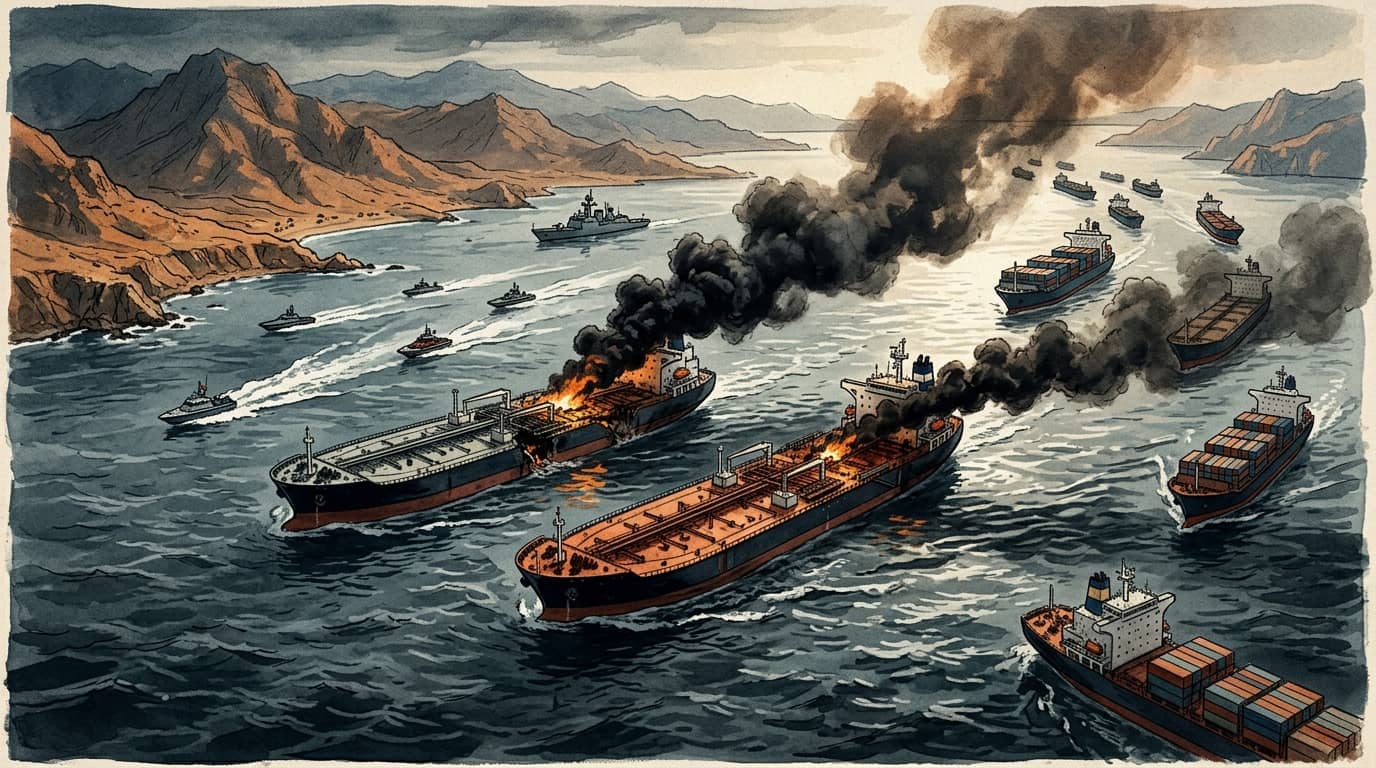
Iran's Islamic Revolutionary Guard Corps struck two oil tankers attempting to transit the Strait of Hormuz under a US military escort on July 31, claiming the vessels used an undeclared route. Four other tankers turned back, and the strait is now almost completely closed to traffic, according to regional reports.
The attack marked the latest escalation in a conflict that resumed after a June ceasefire collapsed on July 8, when Iran attacked vessels in the strait, prompting US retaliatory strikes and a naval blockade. As of July 27, the US had paused new strikes, but Iran stated no ceasefire was in effect, leaving the region without a sustained pause in hostilities.
Oil prices have surged more than 23% in July, with benchmark Brent crude futures rising over 1% on the day of the tanker strikes. Economists polled by Reuters expect prices to climb further as the strait closure disrupts global energy shipments.
No new diplomatic breakthrough has been reported, and negotiations remain stalled. The Strait of Hormuz closure, combined with rising oil prices, is likely to increase pressure on both sides, though neither has signaled a return to talks.