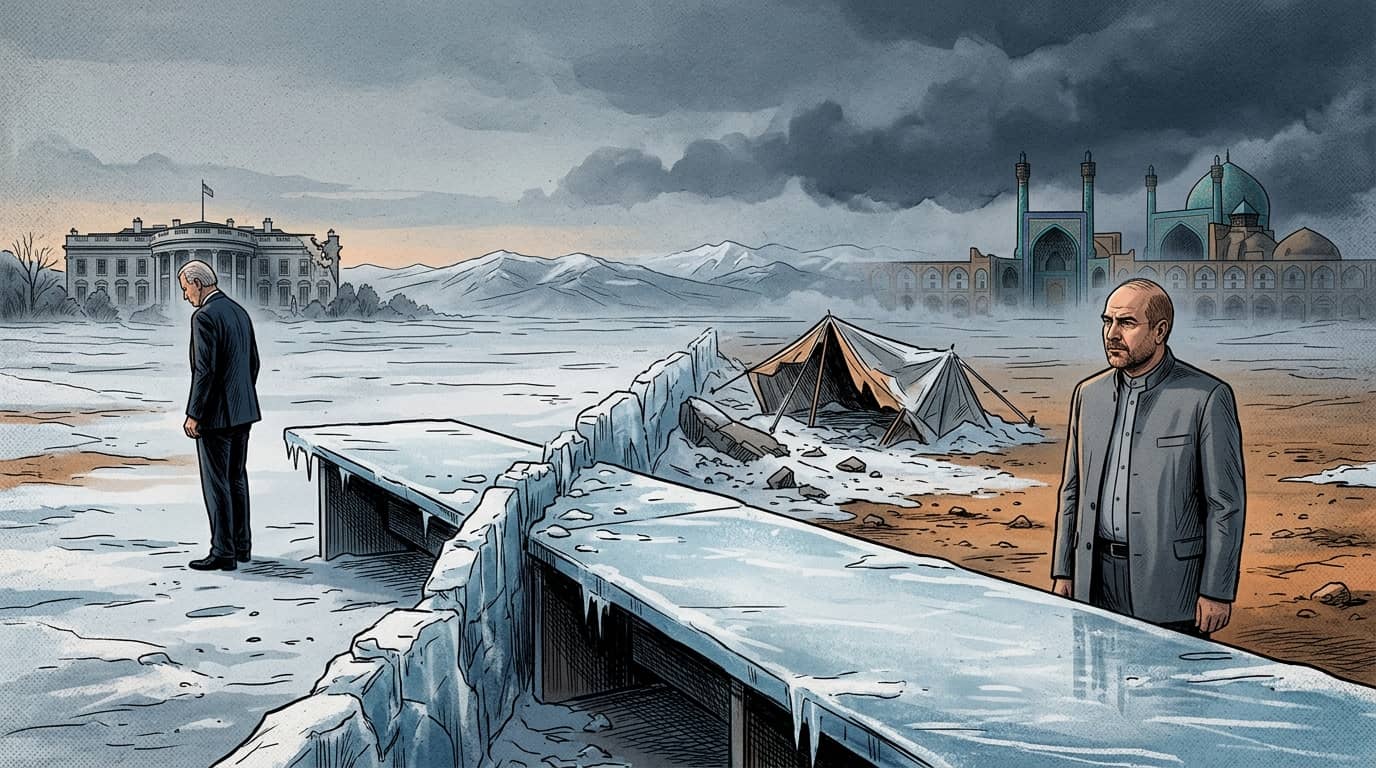
A 60-day U.S.-Iran memorandum of understanding intended to halt hostilities and reopen the Strait of Hormuz expired without a permanent peace deal or nuclear agreement. The pact's expiration left the U.S. naval blockade of the strategic waterway in place and ended a period of relative calm that had allowed oil flows to partially recover.
Oil flows through the Strait of Hormuz nearly tripled during the MoU window, averaging about 6.1 million barrels per day compared with 2.3 million before the deal. Still, throughput remained well below the pre-war level of 15 million barrels per day. The United Arab Emirates suspended all trade with Iran after renewed ballistic missile fire, further isolating Tehran economically.
President Trump has signaled a preference for economic warfare over a rapid military solution, touting the naval blockade and previewing new sanctions. He stated he is "not in a hurry" for a diplomatic resolution after the MoU's expiration. The administration's stance suggests a prolonged standoff rather than an imminent ground invasion.
China has pushed back against the threat of an "economic D-Day" against Iran, with Treasury Secretary Scott Bessent urging Beijing to stop doing business with Tehran. Iran condemned the threats, warning of prosecution for those implementing levies. The diplomatic deadlock leaves the Strait of Hormuz and broader conflict unresolved.
With no new deal on the horizon, the focus shifts to whether the U.S. escalates sanctions or whether Iran responds with further provocations. The prediction market for a U.S. invasion of Iran before 2027 currently stands at 16.5%, with $79,576 in trading volume over the past day, reflecting persistent uncertainty about the path of the crisis.